




Graduate students across the United States are scrambling for clarity as the Trump Administration revisits how federal law defines a professional degree. The shift has fueled confusion and anxiety, especially among nursing students who are discovering that their graduate programs do not meet the federal standard for a professional degree. That classification matters because it affects how much students can borrow once new loan rules take effect in 2026.
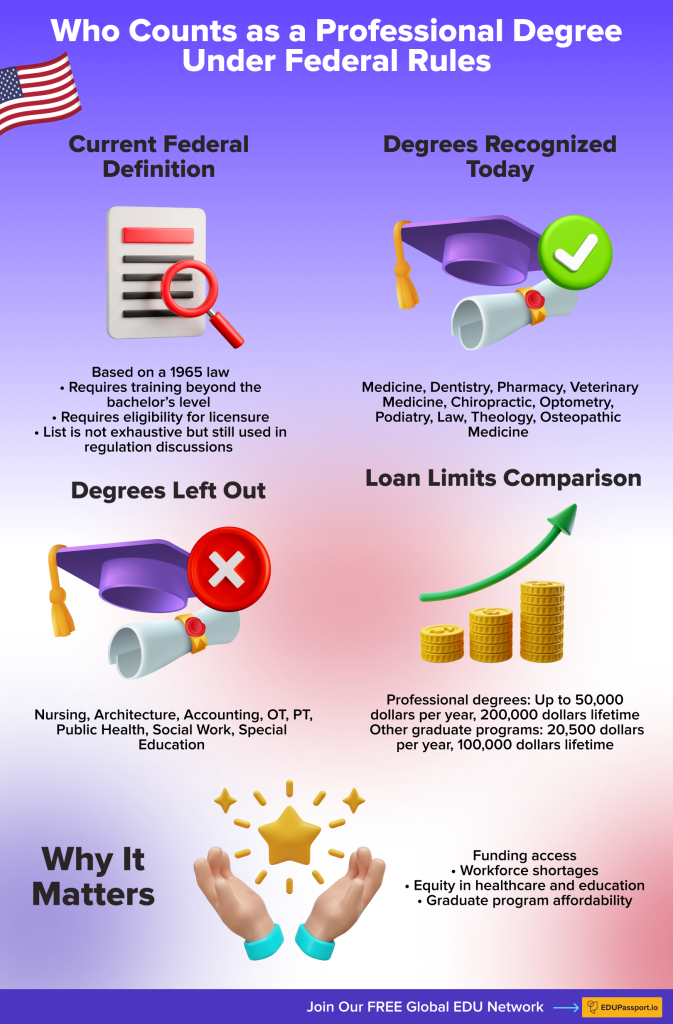
The professional degree list currently includes familiar programs such as medicine, pharmacy, dentistry, veterinary medicine, chiropractic, optometry, podiatry, law, and theology. The Department of Education notes that the definition never included nursing. Yet as federal agencies met this fall to discuss student loan regulations, they relied heavily on the narrow list of ten degrees mentioned in the original 1965 law.
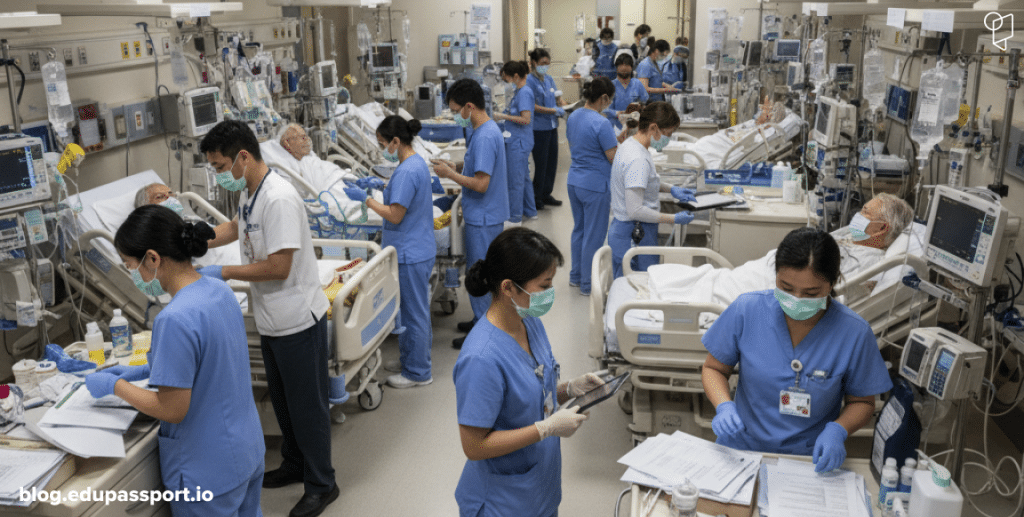
The exclusion surprised many educators and students. Nursing sits at the center of national workforce shortages, and advanced practice nurses play an essential role in health care access, especially in rural and underserved communities. Leaving nursing out of the professional degree category raises questions about how future nurses will finance graduate training.
Where the definition comes from
The term professional degree is rooted in a 1965 federal statute. It describes a credential that signals both readiness to enter a profession and completion of training beyond the bachelor’s level. The law lists examples that reflect mid-century workforce needs, but it also states that the list is not exhaustive.
Still, federal committees discussing student loan regulations have repeatedly used that short list as the working definition. Advocates say that approach is outdated and fails to reflect today’s economy or workforce priorities.
Programs currently recognized as professional degrees include:
• Pharmacy (Pharm.D.)
• Dentistry (D.D.S. or D.M.D.)
• Veterinary Medicine (D.V.M.)
• Chiropractic (D.C. or D.C.M.)
• Law (L.L.B. or J.D.)
• Medicine (M.D.)
• Optometry (O.D.)
• Osteopathic Medicine (D.O.)
• Podiatry (D.P.M. or related)
• Theology (M.Div. or M.H.L.)
Nursing is not on the list, despite the fact that advanced nursing practice requires rigorous graduate education and professional licensure.
Why the exclusion is sparking concern
National organizations are pushing for nursing and other fields to be added to the definition. In a recent letter to the Office of Postsecondary Education, the American Council on Education urged federal leaders to modernize the definition and include a broader range of programs. Their recommendations included nursing, architecture, accounting, occupational therapy, physical therapy, special education, public health, and social work.
The American Nurses Association echoed these concerns. President Jennifer Mensik Kennedy warned that excluding nursing limits access to essential funding for graduate education at a time when the country is experiencing historic nurse shortages. She emphasized that graduate-prepared nurses sustain primary care access in many communities. Restricting their access to federal loans could slow efforts to rebuild the nursing workforce.
Advocates say the stakes are high. Without access to higher loan limits, many nursing students may pursue alternative paths, delay their degrees, or drop out of programs entirely.
What this means for students
The Trump Administration’s Big Beautiful Bill would eliminate the Grad PLUS loan program, which has long helped students in high-intensity professional programs finance their degrees. It would also cap Parent PLUS loans at twenty thousand dollars per year, with a total cap of sixty five thousand dollars.
Instead, students in recognized professional degree programs would be eligible to borrow up to fifty thousand dollars per year with a lifetime limit of two hundred thousand dollars. Students in graduate programs that are not considered professional degrees would be limited to twenty thousand five hundred dollars per year and one hundred thousand dollars total.
That gap is significant. Students in fields left off the professional degree list could find it harder to cover tuition, clinical training costs, materials, licensure exams, or living expenses. Nursing students preparing for advanced practice roles could be among the most affected.
Loan changes are set to take effect on July 1, 2026. Many universities are already revising financial aid guidance, and students are seeking answers that institutions do not yet have.
Why educators should pay attention
Education policies rarely stay confined to one sector. The debate around professional degrees mirrors challenges seen in K to 12 systems as well. For example, literacy policies in Indiana are shaping student outcomes and resource allocation. Teachers and school leaders can explore how these shifts play out in the classroom in this related article: Why Thousands of Indiana Kids Are Repeating Third Grade and What Hope Looks Like Next.
Understanding policy ripple effects helps educators support students and families navigating an increasingly complex educational landscape.
What comes next
With pressure mounting from national associations and workforce leaders, the Department of Education may face continued calls to update the definition of professional degree for the modern era. Until then, students in programs like nursing must plan around lower borrowing limits unless Congress revises the law.
For now, universities, students, and advocacy groups are watching closely. The outcome could shape the future of critical fields including nursing, therapy, social work, and public health. And for students already planning their graduate pathway, the next two years will require careful budgeting, strong guidance, and more transparency from federal agencies.
If this kind of policy shift affects your students or your teaching community, you are not alone. Join EDU Passport for FREE to connect with educators who share strategies, insights, and real experiences navigating changes in education. Your community is waiting.
Reporting originally from USA Today: Nursing is not a ‘professional degree’ amidst student loan changes