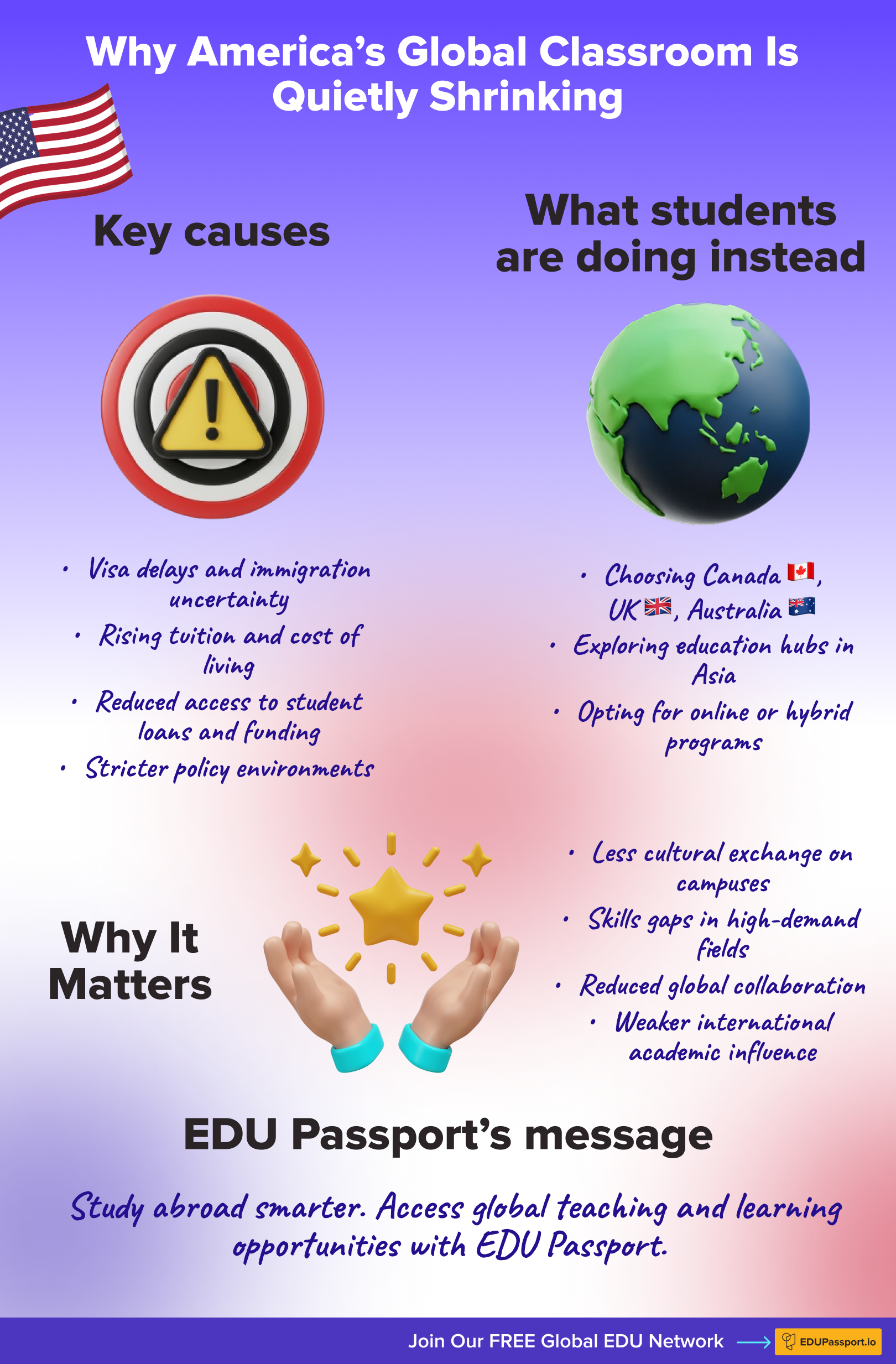






New international student enrollment at US colleges and universities dropped by 17% in the 2025 academic year. It is the steepest decline in more than a decade outside of the Covid period.
The previous year already showed a 7.2% drop. That decline spanned a change in administration and the early stages of tighter visa rules, interview cancellations, deportations, and reduced federal support for higher education institutions.
For 2025 and 2026 planning, 57% of institutions surveyed reported lower new international enrollment. Of those, 27% described the decrease as substantial.
This is not a small fluctuation. It is a structural shift.
Why International Student Enrollment in the US Is Declining
Visa delays and visa denials remain the primary barrier. In previous years, 85% of institutions cited visa problems as the main cause of enrollment drop. That number has now climbed to 96%.
Beyond the paperwork, there is also a deeper issue. Many students feel unwelcome or uncertain about studying in the US. Around 67% of institutions said student concerns about feeling unwelcome played a role. Another 64% pointed to anxiety about the broader social and political environment.
This is not just about access. It is about perception, safety, and long term stability.
The Bigger Picture: International Student Enrollment in the US Faces a Long-Term Decline
While new enrollments fell sharply, the total number of international students in the US stayed close to 1.2 million in 2024 and 2025. This stability is supported mainly by returning students, not by new arrivals.
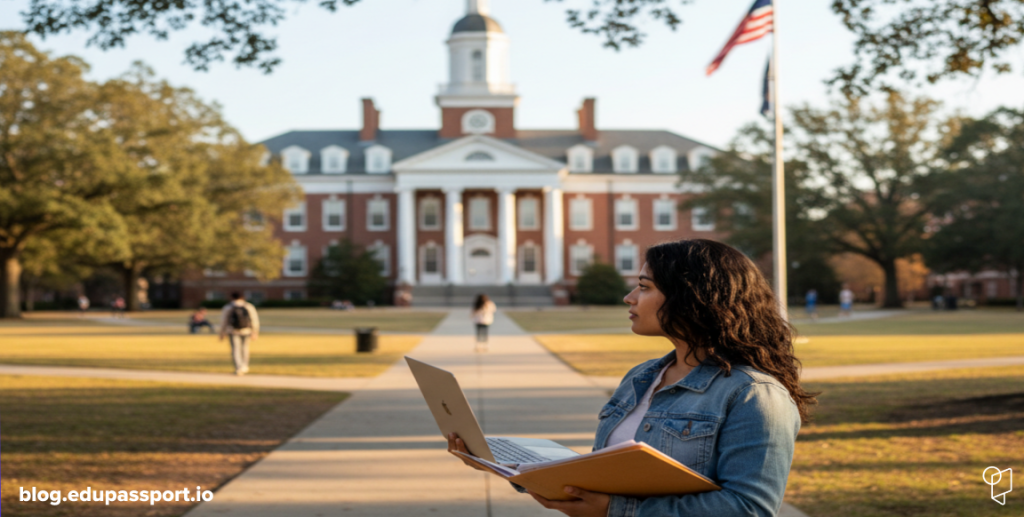
That means the future pipeline of international student enrollment in the US is quietly shrinking.
Visa problems are not the only pressure point reshaping access to American education.
Policy changes in funding may push even more students out of opportunity, especially in essential, high-demand fields. A recent EDU Passport report on U.S. Nursing Students Could Lose Major Funding Under New Loan Rules shows how financial barriers are increasing for students pursuing critical degrees.
When you connect the dots such as visa delays, restrictive policies, rising costs, and shrinking support, one conclusion becomes clear. Studying in the US is becoming less accessible to both international and domestic students.
Experts now see the 2025 decline in international student enrollment as a serious warning sign. Without changes to immigration processes, higher education funding, and student support systems, global learners will continue choosing other destinations such as Canada, the UK, Australia, and emerging education hubs in Asia.
This does not just affect universities. It weakens the position of the US as a leader in research, innovation, and global collaboration.
What This Means for Educators and Institutions
- Lower international enrollment can reduce tuition revenue and program funding
- Classroom diversity and cross-cultural exchange may decline
- Research capacity and global partnerships could weaken
- Competing countries may become the new top choice for international study
For educators, this is not just an enrollment issue. It is a future issue.
The Bigger Picture: International Student Enrollment in the US Faces a Long-Term Decline
While new enrollments took a sharp hit, the total number of international students in the US remained close to 1.2 million in 2024/25. This stability is largely due to returning students, not new arrivals.
In other words, the future pipeline of international student enrollment in the US is quietly shrinking.
Visa challenges are not the only issue reshaping access to American education.
Changes in federal education funding may push even more students out of opportunity, especially in essential, high-demand fields. A recent EDU Passport report explains how U.S. Nursing Students Could Lose Major Funding Under New Loan Rules, a shift that could reduce access to education for thousands of future healthcare professionals.
When you connect the dots such as visa delays, restrictive immigration policies, rising costs, and shrinking funding, one pattern is clear. Studying in the US is becoming less accessible for both international and domestic students.
Experts now see the 2025 drop in international student enrollment as an early warning sign. Without urgent changes to immigration rules, funding structures, and institutional support systems, global students may continue choosing alternative destinations like Canada, the UK, Australia, or emerging education hubs in Asia.
This trend does not only affect universities. It weakens America’s position as a global leader in higher education, innovation, and multicultural collaboration.
EDU Passport’s Takeaway
At EDU Passport, we believe education should be global, accessible, and inclusive. A 17% drop in international enrollment represents fewer voices, fewer perspectives, and fewer chances to learn across cultures.
When access shrinks, opportunity shrinks with it.
That is why we support educators, institutions, and global learners who are navigating this shift and looking for smarter pathways forward.
If you are an educator, institution, or student navigating the changing landscape of global education, join EDU Passport today. Connect with opportunities, share knowledge, and help keep the global classroom open.
This news was adapted from original coverage by The Guardian, which you can read here.