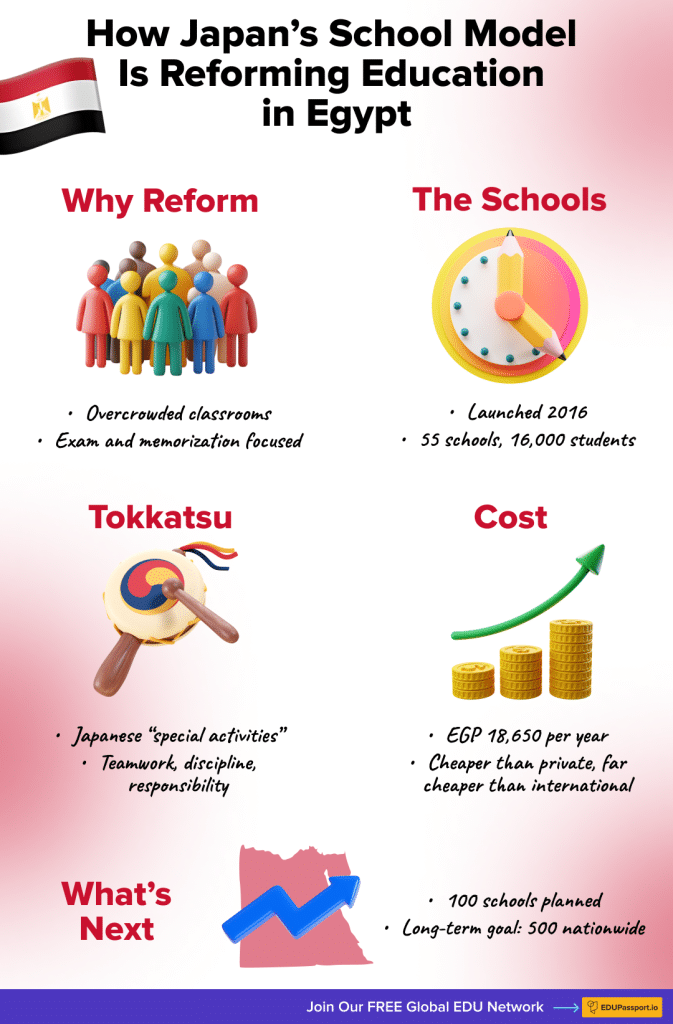





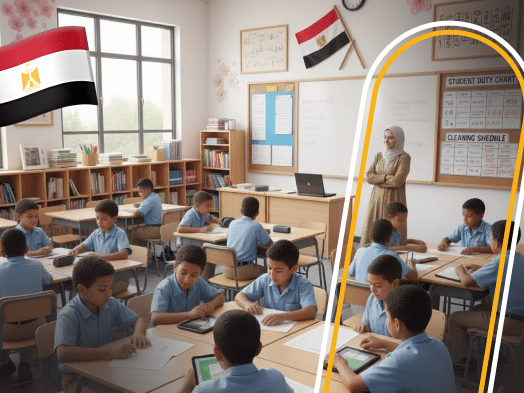
Egypt is testing a different answer to a familiar problem. For decades, public schools across the country have struggled with overcrowded classrooms, exam-driven learning, and heavy reliance on memorization. Now, through a long-running partnership with Japan, the government is experimenting with a school model that puts discipline, collaboration, and emotional development alongside academic achievement.
The result is a growing network of Egyptian-Japanese Schools (EJS), a hybrid system that blends Japan’s education philosophy with Egypt’s national curriculum. According to reporting by Egyptian Streets, the initiative is part of a broader effort to rethink how students learn, behave, and interact inside the classroom, not just how they perform on tests
A decade-long partnership with Japan
The foundations of the program were laid in 2016, when President Abdel Fattah Al-Sisi visited Japan and announced the Egypt-Japan Education Partnership with then Prime Minister Shinzo Abe. The agreement aimed to transfer key elements of Japan’s education culture into Egypt’s public system, particularly those that encourage critical thinking, teamwork, and self-discipline.
Two years later, the project was folded into the Ministry of Education’s sweeping Education 2.0 reform agenda, launched in 2018 and scheduled to reach full implementation by 2030. The reform aligns with Egypt Vision 2030, the country’s long-term plan for social and economic development.
As of early 2025, Egypt operates 55 Egyptian-Japanese schools, enrolling around 16,000 students nationwide. Most families come from middle-income backgrounds and are looking for an alternative to overcrowded public schools without the high costs of elite private or international education.
What makes these schools different
At first glance, Egyptian-Japanese schools follow the same national curriculum as other public institutions. Classes are taught in English, and class sizes are capped at around 35 to 40 students, smaller than many traditional public schools.
The real difference lies in a concept borrowed directly from Japan: Tokkatsu, short for tokubetsu katsudo, or “special activities.” Rather than focusing solely on academic subjects, Tokkatsu emphasizes social responsibility, emotional maturity, cooperation, and daily discipline.
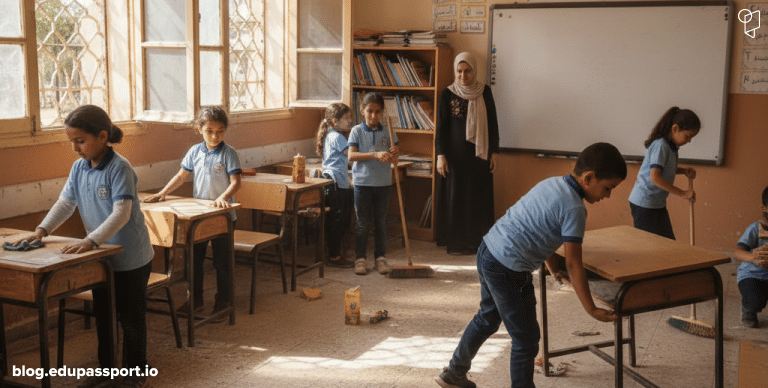
Students take part in routines that may seem unusual in Egypt’s traditional school culture. These include cleaning their classrooms together, organizing school activities collectively, and rotating responsibilities among classmates. The goal is to build habits of respect, accountability, and teamwork from an early age.
Japan’s education system, often cited as one of the strongest globally, consistently ranks high in international comparisons. A 2021 ranking by U.S. News & World Report placed Japan eighth worldwide for public education, with a literacy rate of nearly 99 percent among those aged 15 and older. Egypt, by comparison, ranked 39th in the same survey, underlining the scale of the challenge Egyptian reformers are trying to address.
Backed by Japanese expertise and funding
The program is supported by the Japanese International Cooperation Agency (JICA), which plays a central role in both financing and training. Since 2018, JICA has provided Egypt with an estimated EGP 26.1 billion (around USD 550 million) in grants and loans to build, equip, and support the schools.
Beyond infrastructure, thousands of Egyptian teachers and education officials have traveled to Japan for hands-on training in Tokkatsu methods. These exchanges are designed to ensure that the philosophy behind the model is properly understood and applied, rather than reduced to surface-level routines.
As Egyptian Streets reports, Japanese language instruction is not part of the curriculum. Instead, the focus remains on adapting Japan’s “whole child” approach to the Egyptian context, while avoiding clashes with national academic requirements.
An option for middle-income families
Cost is a major factor shaping the schools’ appeal. For the 2025–2026 academic year, annual tuition at Egyptian-Japanese schools averages EGP 18,650 (about USD 393). This fee does not include uniforms or textbooks and can be paid in three installments spread across the school year.
In comparison, private school fees in Egypt range widely. Arabic- and English-track private schools typically charge between EGP 5,000 and EGP 35,000 per year, while international schools can cost as much as EGP 450,000 (around USD 9,500) annually.
Positioned between these extremes, Egyptian-Japanese schools are marketed as a more affordable upgrade from public education, without crossing into elite private territory.
Expansion plans and long-term goals
The government’s ambitions extend well beyond the current network. Plans are underway to increase the number of Japanese-style schools to 100 in the near term, with selected public schools also receiving upgrades inspired by the model.
Longer term, officials have spoken of expanding the network to 500 schools nationwide, particularly in underserved governorates where overcrowding is most severe. If successful, the model could ease pressure on the public system while reshaping classroom culture at scale.
Still, challenges remain. Scaling a labor-intensive approach like Tokkatsu requires sustained teacher training, consistent funding, and cultural adaptation. Critics also question whether the model can retain its effectiveness if class sizes grow or resources become stretched.
A cultural shift in learning
For now, Egyptian-Japanese schools represent one of the most visible attempts to move Egypt’s education system away from rote memorization and toward a more holistic view of learning. By borrowing selectively from Japan’s experience, policymakers are testing whether values like cooperation, discipline, and emotional intelligence can be taught as deliberately as math or language.
As education reforms continue under Egypt Vision 2030, the success or failure of this experiment may help shape the future direction of public schooling across the country.
Education systems around the world are experimenting with new models to meet modern challenges.
Stay informed on global education reform, policy shifts, and international school systems by joining the EDU News community.