




Teaching English overseas is one of the fastest ways to live abroad, earn a steady income, and build a global teaching career. But figuring out how to get an ESL teaching job overseas can feel overwhelming, especially if you are new to ESL or applying from abroad.
Good news. You do not need to guess your way through it.
This guide breaks the process into clear, practical steps. You will learn what qualifications you actually need, where to find legitimate jobs, how to apply with confidence, and how platforms like EDU Passport make the process safer and easier.
Whether you are a first-time ESL teacher or ready for your next country, this article will help you get hired abroad without the stress.
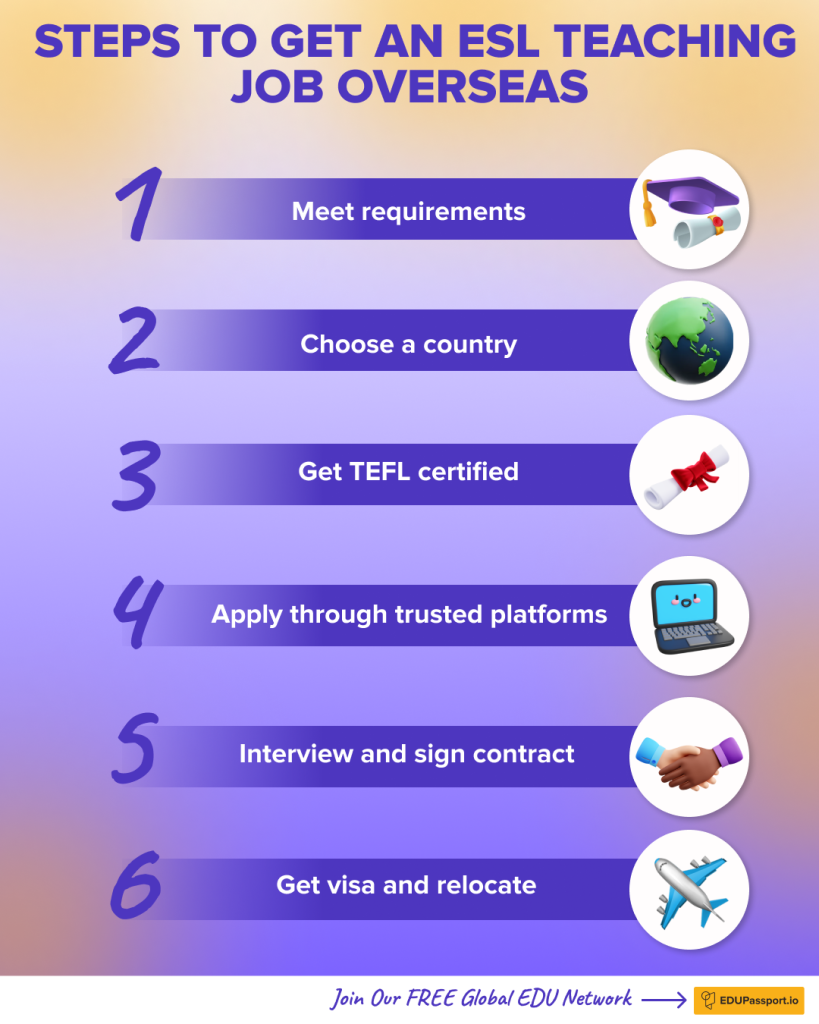
Step 1: Understand the Basic ESL Job Requirements
Before applying, you need to meet the minimum requirements most schools and recruiters expect.
Common ESL Teaching Requirements
Most overseas ESL jobs ask for:
- A bachelor’s degree in any subject
- A TEFL, TESOL, or CELTA certificate
- Native or fluent English proficiency
- A clean background check
Some countries are stricter than others. For example, Japan and South Korea usually require a degree for visa approval, while countries in Latin America or Southeast Asia can be more flexible.
Do You Need Teaching Experience?
Not always. Many schools hire first-time teachers, especially for:
- Entry-level public school programs
- Private language centers
- Conversation-focused roles
If you are new, focus on roles that offer training or mentorship. EDU Passport makes this easier by clearly labeling experience-friendly ESL jobs.
Step 2: Choose the Right Country to Teach ESL
Where you teach matters just as much as how you apply.
Popular ESL Teaching Destinations
Some of the most common countries for ESL teachers include:
- South Korea for strong salaries and benefits
- Japan for structured programs and cultural immersion
- Vietnam and Thailand for lower entry barriers
- Spain and other EU countries for lifestyle-focused roles
- The Middle East for high salaries and experienced teachers
Each country has different visa rules, salary ranges, and expectations. Choosing the right destination early helps you avoid wasted applications.
Tip: If you are unsure where to start, browse country-specific job listings on EDU Passport to compare requirements side by side.

Step 3: Get TEFL Certified the Smart Way
A TEFL certificate is often the fastest way to qualify for ESL jobs overseas.
What Schools Look For
Most employers prefer:
- 120-hour TEFL certification
- Accredited programs
- Practical teaching components
Online TEFL courses are usually accepted, especially for private schools and language centers.
Avoid Common TEFL Mistakes
- Choosing programs with no accreditation
- Paying extra for unnecessary “guaranteed job” claims
- Delaying certification until after applying
Many EDU Passport-listed jobs specify exactly which TEFL certifications they accept, so you know what works before you enroll.
Step 4: Prepare a Strong ESL Resume and Application
Your resume does not need to be long. It needs to be clear.
What to Include in an ESL Resume
- Teaching certifications
- Education history
- Any teaching, tutoring, or coaching experience
- International or cross-cultural experience
- Clear availability dates
Keep it simple. Schools care more about clarity and attitude than flashy design.
Cover Letter Tips
Your cover letter should:
- Show interest in the country and school
- Highlight adaptability and communication skills
- Be tailored, not copied
On EDU Passport, many employers accept direct profile applications, which saves time and reduces repetitive paperwork.
Step 5: Use Trusted Platforms to Find Legitimate ESL Jobs
This step is where many teachers struggle. Not all job boards are created equal.
Red Flags to Watch Out For
Avoid listings that:
- Ask for large upfront fees
- Promise unrealistic salaries
- Provide vague job descriptions
- Refuse video interviews
Why EDU Passport Works
EDU Passport connects educators with verified schools and recruiters. The platform focuses on transparency, real employer profiles, and educator safety.
Benefits include:
- Curated ESL teaching jobs overseas
- Clear visa and qualification requirements
- Direct communication with employers
- Community-driven trust and accountability
Instead of applying everywhere, you apply smarter.
Step 6: Prepare for ESL Interviews
Most ESL interviews are straightforward. Schools want to know if you can communicate clearly and adapt to their students.
Common ESL Interview Questions
- Why do you want to teach in this country?
- How do you manage a classroom with mixed levels?
- How do you explain grammar to beginners?
- Are you comfortable teaching young learners or adults?
Some schools ask for a short demo lesson. Keep it simple, interactive, and student-focused.
Tip: Many EDU Passport employers include interview expectations directly in the job post, so there are no surprises.
Step 7: Understand Contracts, Visas, and Arrival Support
Before accepting an offer, read everything carefully.
Key Contract Details to Check
- Teaching hours per week
- Salary and payment schedule
- Housing or housing allowance
- Health insurance
- Visa sponsorship
Do not be afraid to ask questions. Legitimate employers expect it.
Visa Support Matters
A good employer helps with:
- Work visa documents
- Arrival instructions
- Local registration
EDU Passport job listings clearly state visa sponsorship details, so you know what support is included before you sign.
Step 8: Plan Your Move and Start Teaching
Once your visa is approved, it is time to prepare for life abroad.
What to Do Before You Fly
- Join expat and teacher groups
- Research local cost of living
- Prepare basic classroom materials
- Learn simple classroom phrases in the local language
Teaching ESL overseas is a learning experience. The first few weeks may feel intense, but most teachers settle in quickly.
Common Mistakes ESL Teachers Make
Avoid these pitfalls:
- Applying without reading visa requirements
- Using unverified job boards
- Accepting offers without written contracts
- Rushing into the first offer without comparison
Using a platform built for educators helps you avoid most of these mistakes automatically.