







Every year, thousands of educators search for ESL teaching jobs abroad. The demand is real. So are the scams.
Fake schools copy legitimate websites. “Recruiters” ask for visa fees. Contracts arrive with no school address attached. And by the time some teachers realize what happened, they have already sent money or personal documents.
International teaching can change your career. But only if the opportunity is real.
If you’re serious about teaching overseas, you need more than excitement. You need a smart filter. And a strategy that protects your momentum.
Let’s break down how to find legitimate ESL teaching jobs abroad and avoid the traps that quietly derail too many educators.
Why ESL Job Scams Are Increasing
International teaching is competitive. It’s also high emotion. You want adventure. Growth. A better salary. A new chapter.
Scammers know that.
They create fake schools. Clone real school websites. Post on open job boards. Offer “fast-track visas” for a fee. Promise tax-free salaries that sound too good to question.
And many educators fall for it because they’re moving fast.
Here’s the truth. Legitimate international schools and language institutions do not:
- Ask for payment to secure a job
- Request passport scans before a formal contract
- Offer vague contracts with no school address
- Conduct “interviews” entirely over messaging apps
When something feels rushed or secretive, pause. Real schools operate professionally.
What a Legitimate ESL Teaching Job Looks Like
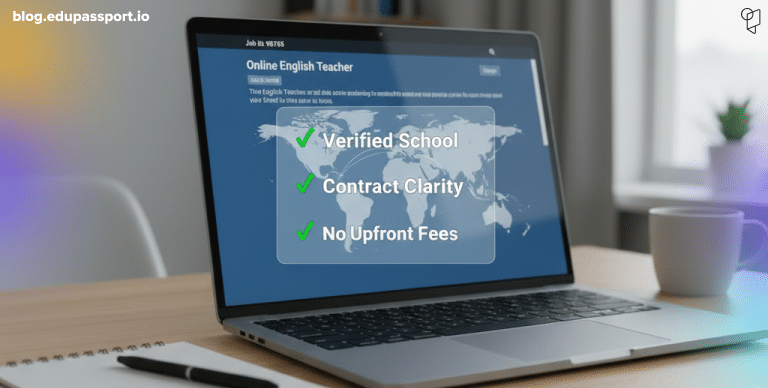
Before you apply, know what credibility looks like.
1. A Verifiable School Presence
A legitimate school will have:
- A professional website with staff names and campus photos
- A physical address you can confirm on Google Maps
- Clear contact details linked to a school domain, not a free email
Search the school name plus the word “reviews.” Look for teacher forums and LinkedIn profiles of current staff.
If no one seems to work there, that’s your red flag.
2. A Structured Hiring Process
Real international schools follow process.
You can expect:
- A formal application
- A scheduled video interview
- Reference checks
- A written contract
They will not skip steps because “the principal is traveling” or because “you must decide today.”
Professional schools hire professionally.
3. Transparent Contracts and Visa Support
A legitimate ESL contract should clearly outline:
- Salary and payment currency
- Teaching hours
- Housing or allowance details
- Visa sponsorship information
- Medical insurance
If terms are vague, inconsistent, or constantly changing, walk away.
Common ESL Job Scams to Watch For
The “Visa Processing Fee” Trap
You’re offered a job. Congratulations. Then they ask you to send money for visa paperwork.
No legitimate employer requires upfront payment from teachers for visa sponsorship. Schools handle this or deduct official costs transparently through payroll.
The Fake Recruitment Agency
Some agencies copy logos of reputable schools. Others invent partnerships.
Before working with an agency:
- Verify they have a registered business presence
- Check educator reviews
- Confirm they are listed on official school recruitment pages
If you can’t independently verify them, don’t proceed.
The Too-Good-To-Be-True Salary
High salary. Free villa. Paid flights for your entire family. No qualifications required.
Pause.
Competitive international schools require credentials. If they don’t care about your experience, that’s a problem.
Smart Ways to Find Legitimate ESL Teaching Jobs Abroad
Avoiding scams isn’t just about spotting red flags. It’s about searching in smarter places.
Use Curated Education Platforms
Open job boards are easy targets for scammers. Education-focused platforms vet listings and connect you directly with schools.
On EDU Passport, you can explore verified international teaching opportunities across regions. Schools create professional profiles. You see real listings. You connect inside an educator-first ecosystem.
It’s built for teachers, not spammers.
Explore current international ESL job listings here.
Research Schools Before You Apply
Look for:
- Accreditation
- Years of operation
- Leadership profiles
- Community reputation
International school associations and conference exhibitor lists are useful indicators. Schools that attend global education events tend to operate transparently.
On EDU Passport, you can also discover education events and conferences where legitimate schools recruit and network. That visibility matters.
Leverage Professional Networks
Scammers operate in isolation. Real schools exist in community.
Check LinkedIn. Search staff members. See if educators publicly associate with the school.
Better yet, join a professional education platform where schools, vendors, and educators interact openly. When a school participates in industry events or partners with recognized vendors, that’s a credibility signal.
The Career Impact of Choosing the Right School
This isn’t just about avoiding loss. It’s about protecting momentum.
A legitimate ESL role abroad can:
- Expand your leadership potential
- Increase your salary trajectory
- Build international curriculum experience
- Strengthen your resume for future global roles
A scam wastes time, money, and confidence.
The difference often comes down to where you search and how you vet.
Opportunity Bridge: Jobs, Events, Vendors, Growth
Here’s where this becomes strategic.
When you use a global education hub like EDU Passport, you’re not just browsing jobs.
You can:
- Discover verified international ESL job listings
- Attend education conferences where reputable schools recruit
- Connect with education vendors that support classroom impact
- Explore leadership pathways and career growth opportunities
Legitimate schools show up consistently. They post real roles. They attend events. They collaborate with recognized vendors. They build visible reputations.
That ecosystem protects you.
And it accelerates your career.
Because the goal is not just “teach abroad.”
It’s teach abroad well.
With the right institution.
On a path that moves you forward.
Quick Checklist Before You Accept an ESL Job Abroad
Before signing anything, ask yourself:
- Can I verify the school’s physical location?
- Do staff publicly list this school on LinkedIn?
- Is the contract detailed and consistent?
- Am I being asked to pay anything upfront?
- Have I spoken to a real human via scheduled interview?
If any answer feels uncertain, slow down.
Your career deserves clarity.
Final Thoughts: Choose Opportunity, Not Risk
Teaching abroad can expand your career in ways few roles can. You build global experience. You grow faster. You see education through a wider lens.
But none of that happens if you start in the wrong place.
A legitimate ESL job should move you forward. It should strengthen your resume, widen your network, and open new doors. Not drain your savings. Not shake your confidence. Not stall your progress.
So be selective. Be strategic. Place yourself where real schools show up and real opportunities live.
If you’re ready to explore legitimate ESL teaching jobs abroad and connect with a global community of educators, start with EDU Passport. Discover verified job listings. Explore international education events. Connect with trusted vendors and career growth opportunities.