





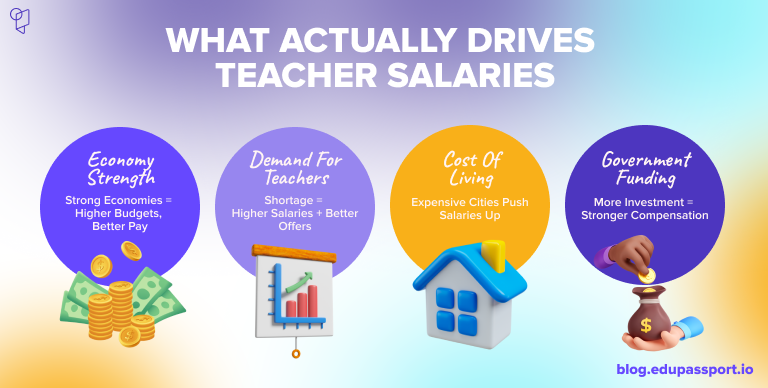
Teacher compensation is influenced by multiple factors, including national economic strength, government investment in education, cost of living, and demand for qualified educators. In OECD countries, teachers typically earn between 80% and 95% of the salaries of other university-educated professionals. However, absolute salary levels vary dramatically, ranging from under $20,000 annually in some regions to well over $100,000 in top-paying countries.
Luxembourg: The Highest-Paying Country for Teachers
Luxembourg remains the global leader in teacher salaries. Experienced educators can earn more than $110,000 per year, while starting salaries are among the highest worldwide. This is largely due to the country’s strong economy, high cost of living, and consistent investment in education. Teaching in Luxembourg is considered a premium profession with strong financial incentives.
Switzerland: High Salaries with Exceptional Living Standards
Switzerland offers some of the most competitive salaries globally, typically ranging between $80,000 and $100,000 annually. Teachers also benefit from excellent working conditions, strong social protections, and a high level of professional respect. Although the cost of living is high, compensation levels remain attractive relative to other professions.
Germany: Stability and Long-Term Financial Security
Germany combines solid salaries with long-term job stability. Teachers can earn between $60,000 and $90,000 depending on experience and region. The profession is supported by strong government structures, pension systems, and career progression frameworks, making it one of the most secure teaching environments globally.
Netherlands and Austria: Strong Earnings with Work-Life Balance
Both the Netherlands and Austria offer high earning potential for experienced teachers, often reaching or exceeding $90,000 annually. These countries also provide balanced workloads, structured career development, and well-funded education systems, making them attractive for both local and international educators.
Australia: Competitive Salaries Outside Europe
Australia stands out as one of the highest-paying countries outside Europe. Experienced teachers can earn around $100,000 annually, supported by a strong demand for educators and well-established public education funding. Salaries are competitive compared to other professions, particularly in urban areas.
UAE and Gulf Countries: Tax-Free Income and Benefits
The United Arab Emirates and other Gulf countries offer a unique compensation structure. While base salaries typically range from $3,500 to $5,500 per month, the absence of income tax significantly increases net earnings. Additional benefits such as housing, healthcare, and travel allowances make these destinations particularly attractive for expatriate teachers.
Japan and South Korea: Consistent Demand and Structured Packages
Japan and South Korea continue to attract international teachers with stable salaries and comprehensive benefit packages. Monthly earnings range from approximately $1,700 to $4,000 depending on experience and institution. These markets are especially popular for early-career educators seeking international experience.
Global Salary Overview
Across OECD countries, average teacher salaries for experienced professionals typically range between $55,000 and $65,000 annually. However, top-tier countries significantly exceed this range, while lower-income regions may fall well below it. This creates one of the widest global income gaps among professional careers.
In 2026, teaching is no longer universally associated with low pay. In countries such as Luxembourg, Switzerland, and Australia, it represents a financially rewarding and stable career. At the same time, global disparities highlight the importance of location when evaluating opportunities in education.
For educators considering international careers, salary is only one factor. Cost of living, benefits, career growth, and lifestyle all play a critical role in determining the true value of a teaching position.
To access these opportunities, the way you present yourself matters just as much as where you apply. Get started with EDU Passport