


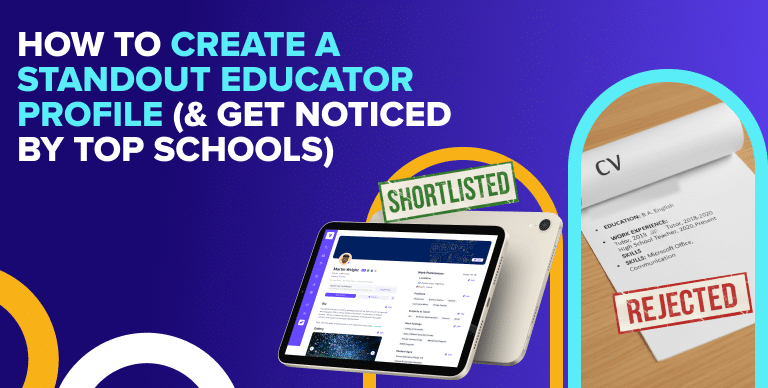
Most teachers assume that having the right qualifications is enough to get noticed. In reality, it is not.
Schools today are reviewing hundreds of applications for a single role. Many candidates have similar degrees, similar experience, and similar skills. What separates those who get shortlisted from those who get ignored is not just what they have done, but how clearly they present it.
If you are wondering how to create a standout educator profile, the answer is simpler than you think. It is not about adding more, it is about presenting better.
This guide shows you how to do exactly that.
What Makes an Educator Profile Stand Out
A standout educator profile is not longer or more complicated. It is clearer, more focused, and easier to evaluate.
Instead of overwhelming schools with information, it highlights the most important things: your impact, your teaching style, and your ability to contribute to a modern learning environment.
When done right, your profile answers one key question quickly:
“Why should this teacher be shortlisted?”
Why Most Teacher Profiles Get Ignored
Before improving your profile, it helps to understand why many applications fail.
In most cases, the problem is not lack of experience. It is poor positioning. Profiles often feel too generic, too task-focused, or too difficult to scan.
Recruiters do not have time to interpret your experience. If your value is not immediately obvious, they simply move on.
That is why learning how to create a standout educator profile is one of the highest-impact things you can do for your career.
Step 1: Position Yourself with a Clear Professional Identity
Your profile should immediately communicate who you are as an educator.
This is not just about your job title. It is about your strengths and focus. Whether you specialize in student-centered learning, exam performance improvement, or integrating technology into lessons, that positioning should be clear from the start.
A strong opening creates direction and makes the rest of your profile easier to understand.
Step 2: Focus on Impact Instead of Responsibilities
This is where most profiles fall short.
Listing responsibilities does not differentiate you, because every teacher has similar duties. What schools actually care about is what changed because of your work.
Even simple improvements in student engag
ement or performance can become powerful when clearly stated. This shift in how you present your experience is one of the fastest ways to stand out.
Step 3: Make Your Teaching Approach Visible
Schools are not just hiring your qualifications, they are hiring your approach.
Your profile should give a clear sense of how you teach, how you manage your classroom, and how you support different types of learners. This helps decision-makers visualize you in their environment.
The more real and practical this feels, the stronger your profile becomes.
Step 4: Build Trust with Evidence
A strong profile does not rely on claims alone.
Adding proof, whether through measurable results, certifications, or supporting materials, makes your profile more credible. It reduces doubt and makes it easier for schools to move you forward in the hiring process.
This is especially important in international hiring, where schools may not know your background directly.
Step 5: Show That You Are Ready for Modern Classrooms
Education today is global and technology-driven.
Profiles that reflect adaptability, digital skills, and cultural awareness naturally stand out more. Even small details, such as experience with online teaching tools or diverse classrooms, can signal readiness for international environments.
This positions you as relevant, not outdated.
Step 6: Make It Effortless to Scan
Even strong content can be ignored if it is hard to read.
Your profile should feel structured, clean, and easy to navigate. When key information is visible at a glance, it increases the chances that recruiters actually notice your strengths.
In a fast-moving hiring process, clarity is a competitive advantage.
Step 7: Upgrade How You Present Your Profile

One of the biggest shifts in recent years is not just what you present, but how you present it.
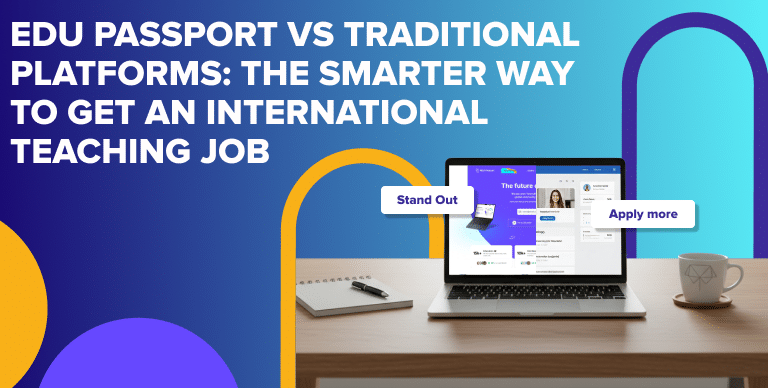
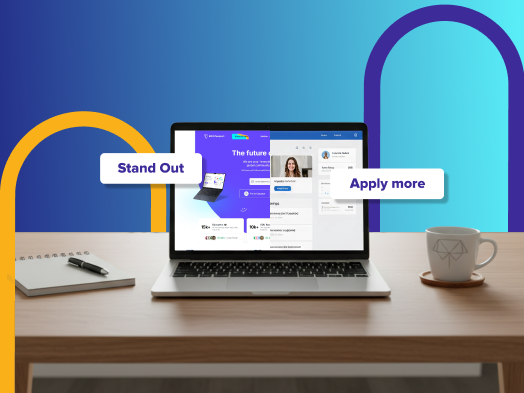
Instead of sending multiple documents, many educators are now using structured profile platforms that organize everything in one place. This makes it easier for schools to review, trust, and shortlist candidates.
It also removes friction from the application process, which can quietly increase your chances of success.
The Hidden Advantage Most Educators Miss
Here is something many candidates underestimate:
Recruiters are not just selecting the most qualified candidates. They are selecting the easiest candidates to evaluate.
If your profile is clear, structured, and backed by evidence, you reduce the effort required to shortlist you. That alone can give you an edge over more experienced candidates with weaker presentation.
Conclusion: Clarity Is What Gets You Shortlisted
Learning how to create a standout educator profile is less about adding more content and more about removing confusion. When your strengths are clear, your impact is visible, and your profile is easy to review, you naturally stand out in a crowded market.
That is what turns applications into interviews.
If you want to take this a step further, building a structured profile through EDU Passport can help you present everything in one place, professionally and clearly. It is a simple way to make your profile easier for schools to trust, review, and shortlist.
Start building a profile that works for you, not against you.