





School closures sound like bad news. And for communities, they often are. But for educators, declining enrollment and school consolidation signal something deeper. The education landscape is reshaping itself. Roles are moving. Skills are being revalued. New opportunities are opening in places many teachers are not looking yet.
If you work in K–12, ESL/EAL, international schools, or education leadership, this shift matters to your career. Not tomorrow. Right now.
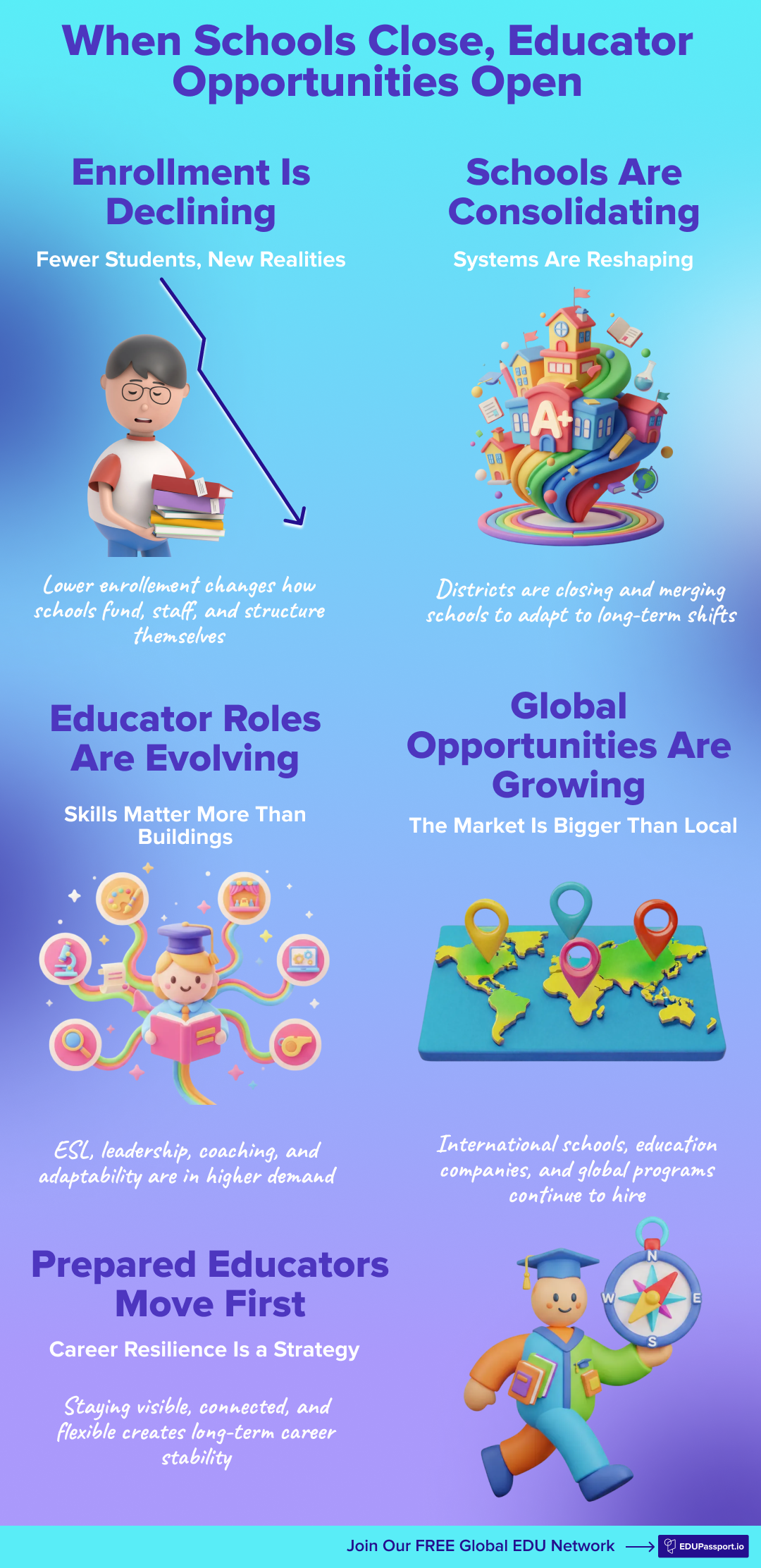
According to reporting by K-12 Dive, public school districts across the United States are responding to long-term enrollment declines by closing or consolidating schools. That trend is not temporary. And it is not just an American story.
This article is not about which schools are closing. It is about what this structural change means for educators and how to stay ahead of it.
What’s changing in public education
Across many regions, fewer students are enrolling in traditional public schools. Several forces are driving this shift.
Birth rates are declining. Families are moving differently. School choice options are expanding. Charter schools, magnet programs, online learning, and private education are competing for the same students.
When enrollment drops, funding drops. Most public school budgets depend on per-student funding. Fewer students mean fewer dollars. Districts then face hard decisions.
The result is consolidation. Schools merge. Campuses close. Programs get centralized. Specialized services move to regional hubs instead of neighborhood schools.
Large districts have already approved plans to reduce the number of school buildings and reassign students. Others are actively reviewing similar strategies. While the details differ by district, the direction is consistent.
Education systems are becoming leaner, more centralized, and more strategic about where they invest resources.
What this means for educator careers and opportunities

This shift does not reduce the need for educators. It changes where and how that need shows up.
Here is what we are seeing across the global education ecosystem.
More competition for traditional roles
In areas with declining enrollment, teaching positions may become more competitive. Some roles disappear. Others merge. Educators with narrow experience may feel squeezed.
Higher demand for specialized skills
As systems consolidate, schools prioritize teachers who can do more. ESL and EAL expertise. Special education. Instructional coaching. Data-informed teaching. Social and emotional learning. These skills travel well across schools and borders.
Growth outside the traditional public system
While public schools adjust, other sectors grow. International schools continue expanding. Private bilingual schools attract families seeking alternatives. Education companies need former teachers for curriculum, training, and support roles.
More global mobility
Educators affected by closures often reconsider location. Some move to different states. Others look abroad. International schools value experienced teachers who understand diverse classrooms and adaptable systems.
Leadership pathways emerge
Consolidation creates change management challenges. Schools need coordinators, department heads, and instructional leaders who can support transitions, staff restructuring, and new models of delivery.
In short, stability is no longer tied to one building or one district. It is tied to adaptable skills and visibility in the broader education market.
How educators can respond and prepare
You do not need to panic. You need a plan.
Here are practical ways educators can stay ahead of these shifts.
Audit your transferable skills
Look beyond your job title. Classroom management. Curriculum design. Assessment literacy. Multilingual instruction. These skills apply across schools, countries, and education companies.
Strengthen globally relevant credentials
Certifications in ESL, IB, Cambridge, SEL, or instructional coaching increase mobility. So does experience with diverse student populations.
Expand your professional network intentionally
Many opportunities never hit public job boards. They move through networks, referrals, and education communities. Staying visible matters.
Stay informed without doomscrolling
You do not need to track every closure. You do need to understand patterns. Follow education labor trends, enrollment shifts, and emerging school models.
Explore adjacent roles early
Curriculum writing. Teacher training. Edtech implementation. Academic coordination. These roles often value classroom experience and offer more geographic flexibility.
Preparation is not about escaping teaching. It is about future-proofing your career.
Where EDU Passport fits into this new reality
As education systems shift, educators need clearer pathways. Not noise. Not panic. Direction.
That is where EDU Passport comes in.
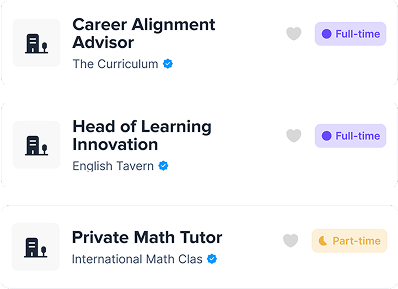
EDU Passport is a global education hub built for moments like this. Educators use it to discover international teaching jobs, professional events, education vendors, and career growth opportunities across borders and sectors.
If your local system is consolidating, EDU Passport helps you see what is opening elsewhere. International schools hiring ESL teachers. Conferences focused on bilingual education. Vendors looking for educators with classroom credibility.
Instead of reacting late, you can explore options early. Quietly. Strategically.
You do not have to leave education to move forward in it.
A closing thought for educators navigating change
School closures feel personal. They affect colleagues, students, and communities. Acknowledging that matters.
But careers are not buildings. They are skills, experience, and networks.
Enrollment shifts are reshaping education worldwide. Educators who stay adaptable, connected, and globally aware will not just survive these changes. They will lead through them.
If you want to see where global education opportunities are emerging and how your experience fits, EDU Passport is built to support that journey.
Create your free EDU Passport profile and explore what is opening up next.