




Dementia affects close to fifty million people across the world, and that number is expected to triple by 2050. Yet many cases still go unnoticed in hospitals, where early detection can make the biggest difference. A new Australian study suggests artificial intelligence may help close that gap by finding signs that traditional methods routinely miss.
Researchers from the National Centre for Healthy Ageing, a collaboration between Monash University and Peninsula Health, tested a new way to identify dementia using both structured medical data and written notes inside electronic health records. Their findings, published in Alzheimer’s & Dementia, show that combining traditional diagnostic clues with AI can produce highly accurate results. The original report, “How AI can improve dementia detection,” was published by The World Education News and can be read at their website.
A Faster Way to Catch Hidden Cases
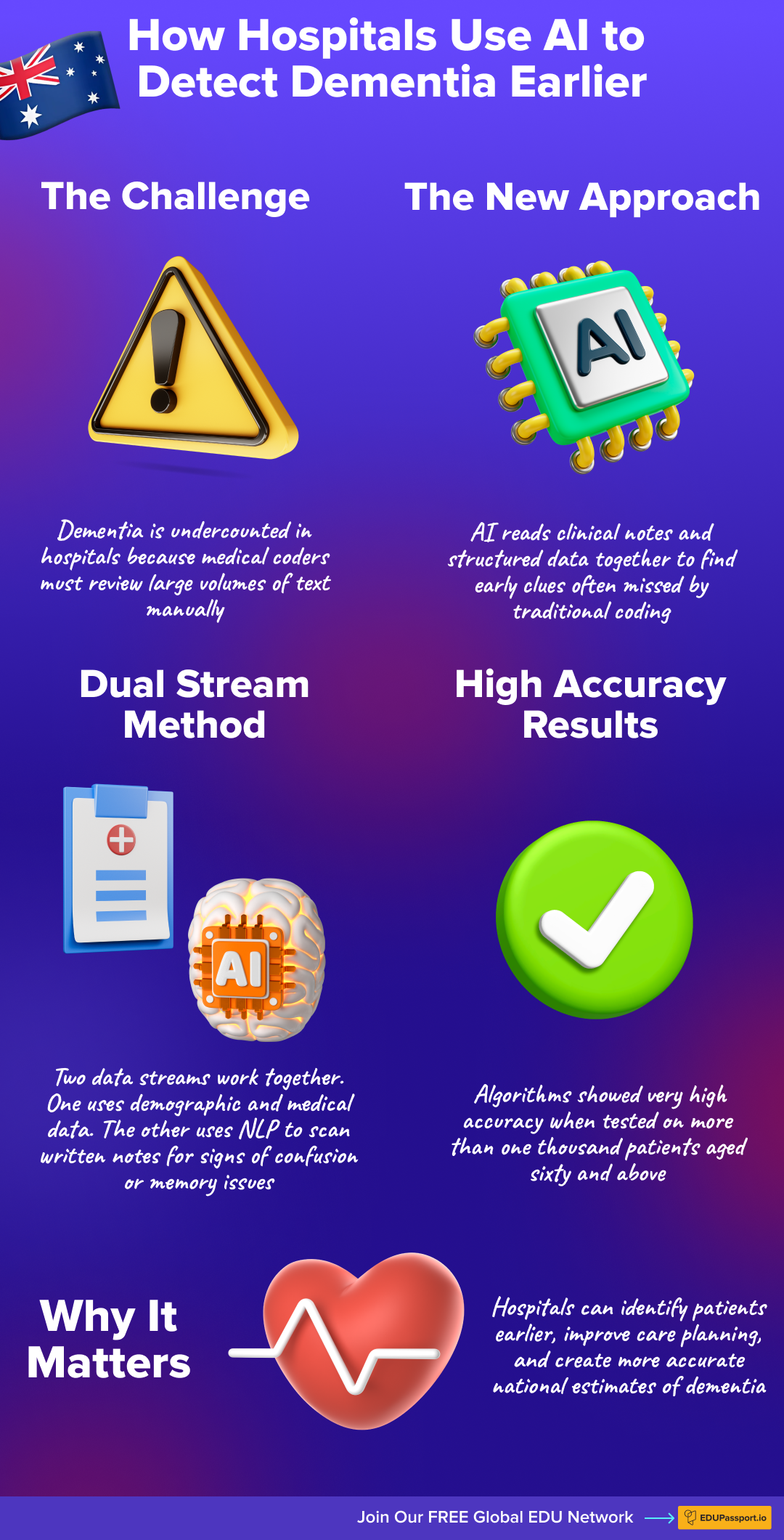
Australia’s current approach to estimating dementia relies heavily on routine hospital data, which often undercounts patients. Medical coders must comb through pages of clinical notes, a task that is both time consuming and vulnerable to human error.
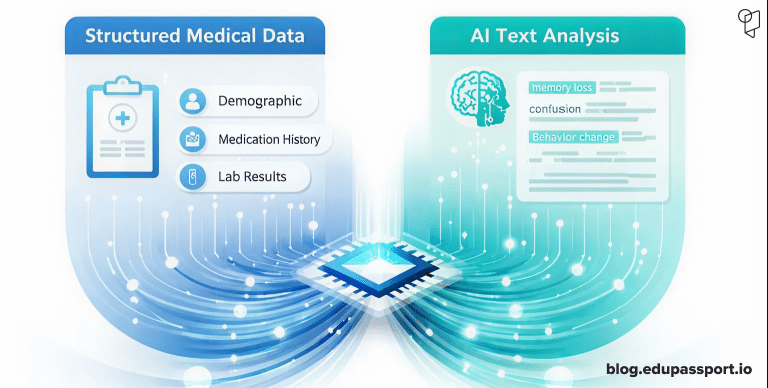
In the new study, researchers analysed data from more than one thousand adults aged sixty and above living in the Frankston-Mornington Peninsula region. They developed dual algorithms: one using traditional structured data and another powered by natural language processing, a type of AI that reads and interprets written text.
The AI model scanned descriptions of confusion, forgetfulness, behavioural changes, and other subtle indicators buried in clinical notes. When combined with demographic information, medication history, and emergency visits, the system spotted dementia with striking accuracy.
Why This Matters for Hospitals
Lead author Dr. Taya Collyer explained that high quality curated records from the Healthy Ageing Data Platform made it possible to assemble a strong dataset. Specialists had already confirmed diagnoses using gold standard methods, giving the team a reliable way to test whether the AI could match expert judgment.
Professor Velandai Srikanth, the project lead, said the approach has huge potential for public health. Many people come to hospitals with dementia symptoms, yet hospital teams may not recognise the condition. Earlier identification could connect patients to needed support while improving national estimates of dementia prevalence.
“This method lets us capture clues that are already in the record. We just have not had the tools to use them at scale,” he said.
The Bigger Story About AI in Healthcare
This study also adds to the wider conversation about how AI is changing the way we work and learn. At EDU Passport, we recently reflected on this in Is AI Making Us Worse Writers or Just Smarter Ones?, which looks at how AI tools are shaping thinking, writing, and decision making across classrooms and workplaces. The dementia project shows how responsible and thoughtful use of AI can uncover insights that help people receive care sooner.
Supported by Major Health Agencies
The initiative received funding from the National Health and Medical Research Council, the Medical Research Future Fund, and the Department of Health and Aged Care. Together, these groups hope the method will become a national standard for identifying people who need timely support but are often missed.
As Professor Srikanth noted, “Many people are missing out on good care because we are not very good at identifying them or their needs. This digital strategy may finally help us change that.”
If stories like this help you stay informed about education, health, and the future of work, you might enjoy exploring more conversations inside EDU Passport. It is a space where educators and lifelong learners share insights, swap ideas, and stay updated on emerging trends. You are welcome to join the community whenever you are ready.