




Teaching English abroad is not a fantasy. It’s a smart career move. And yes, ESL teachers are still in demand around the world. The problem isn’t the opportunity. It’s the process. Different countries have different requirements, job posts can be vague, and a lot of online advice is outdated. This guide breaks down how to apply for ESL jobs abroad, step by step, so you can go from browsing listings to landing interviews with confidence.
Why ESL Jobs Abroad Are Still in High Demand
English is a global skill and schools are hiring.
International schools, private academies, bilingual programs, and government-backed initiatives all need qualified ESL teachers. Especially those who can adapt fast and work across cultures.
Demand is strongest in:
- Asia
- The Middle East
- Europe
- Latin America
But demand alone doesn’t get you hired, process does.
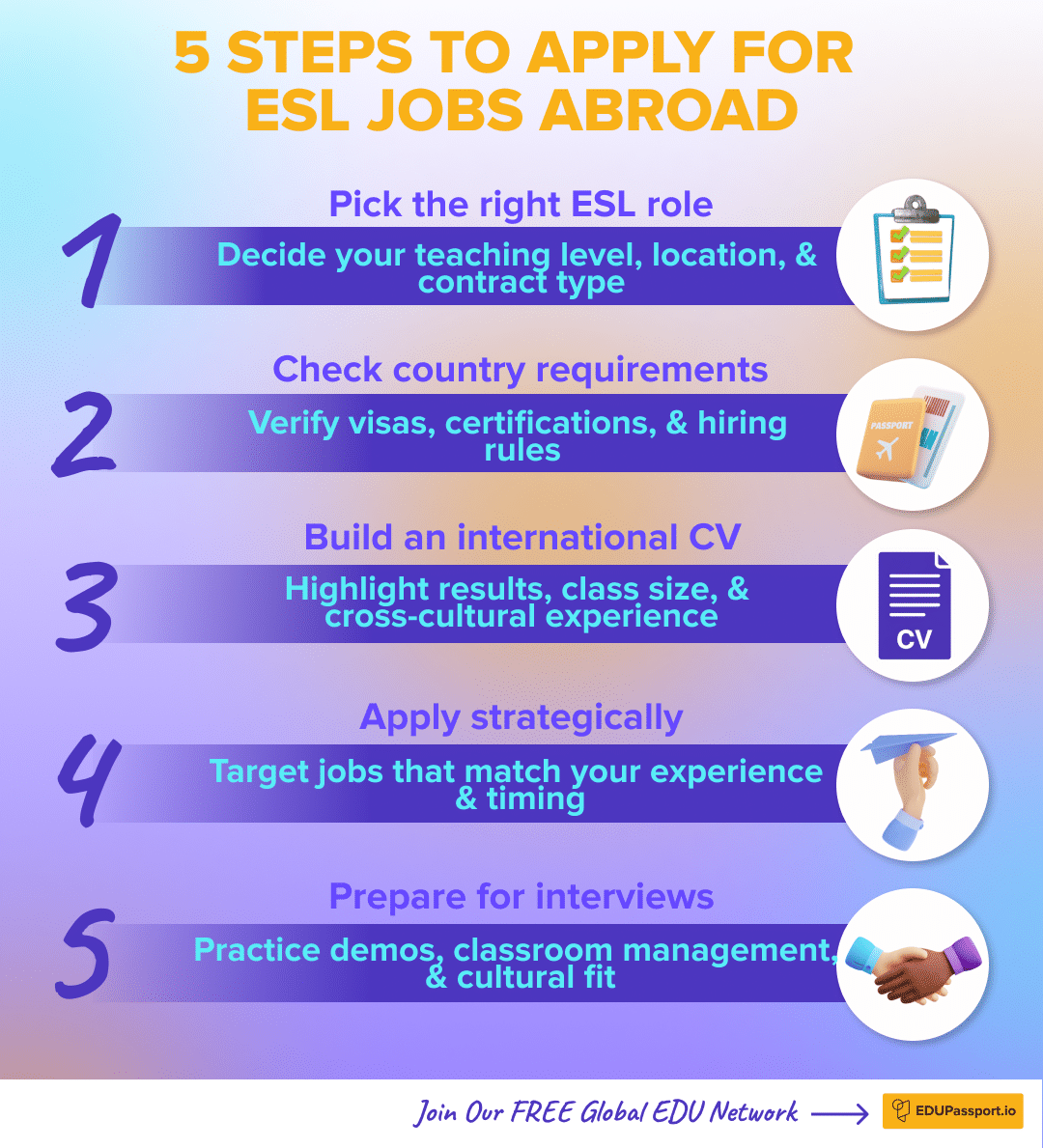
Step 1: Know Which ESL Jobs Fit You
Before you apply, get specific.
Not all ESL jobs abroad are the same. Titles vary. Expectations vary. Pay varies.
Common ESL job types
- ESL Teacher at international schools
- EAL Specialist in bilingual schools
- Language Center Instructor
- Curriculum or Academic Coordinator
- Online-to-onsite hybrid roles
Ask yourself:
- Do you want K–12 or adults?
- Classroom or conversation-focused?
- Short-term contract or long-term career path?
Clarity saves time.
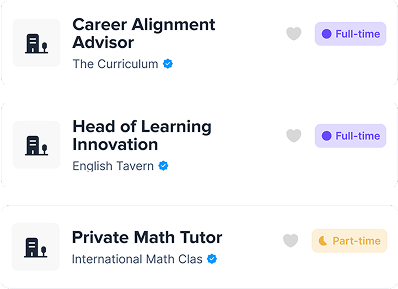
On EDU Passport, you can filter ESL job listings by country, role, and school type so you are not applying blind.
Step 2: Understand Country-Specific Requirements

This step trips people up.
Each country sets its own rules. Schools follow them closely.
Most ESL jobs abroad require:
- A bachelor’s degree
- ESL certification like TEFL, TESOL, or CELTA
- Native or near-native English proficiency
- Clean background check
Some countries also require:
- Teaching license
- Minimum years of experience
- In-country visa processing
Do not rely on Reddit threads from 2018. Check current job listings and employer requirements.
This is where global platforms matter.
Step 3: Build an ESL-Ready CV and Profile
Your resume needs to speak internationally.
That means:
- Clear teaching outcomes
- Curriculum familiarity
- Classroom size and age groups
- Cross-cultural experience
Avoid long paragraphs. Use bullet points. Use results.
Example:
- Taught ESL to 25 Grade 4 students using CLIL methods
- Improved speaking confidence through project-based learning
- Collaborated with international staff from 6 countries
On EDU Passport, your educator profile works like a living CV. Schools find you. Not the other way around.
Step 4: Apply Strategically, Not Everywhere
Mass applying hurts your chances.
Smart educators:
- Apply to roles that match their experience
- Track timelines by region
- Customize short cover notes
Hiring seasons matter.
- Asia often hires early in the year
- Middle East peaks spring to summer
- Europe varies by school calendar
You can explore current ESL job openings directly on EDU Passport and see which schools are actively hiring now.
Step 5: Prepare for International Interviews
Most ESL interviews happen online.
Expect:
- Teaching demo or mock lesson
- Questions about classroom management
- Cultural adaptability scenarios
Be ready to explain:
- How you teach mixed-level classes
- How you support non-native learners
- How you handle parents and school expectations
Confidence matters. So does clarity.
Step 6: Evaluate the Offer Carefully
An ESL job abroad is more than salary.
Check:
- Housing support
- Visa sponsorship
- Health insurance
- Contract length
- Professional development opportunities
Some schools also offer:
- Leadership tracks
- Training events
- Conference funding
These extras shape your long-term career, not just your paycheck.
How EDU Passport Supports ESL Educators Beyond Jobs
EDU Passport is not just a job board.
It’s a global educator hub.
On one platform, you can:
- Discover verified ESL teaching jobs worldwide
- Find education conferences and ESL events
- Explore tools, vendors, and teaching services
- Build visibility as an international educator
Many educators start with one ESL role and grow into leadership, training, or consulting. EDU Passport supports that full journey.
Also Read: How to get an ESL teaching job overseas
Final Tips for First-Time ESL Applicants
- Start early
- Stay organized
- Ask questions
- Think long-term
Teaching abroad is not a gap year. It can be a global career.
And the right platform makes all the difference.
Ready to Apply for ESL Jobs Abroad?
If you’re serious about teaching English overseas, stop piecing information together.
Create your educator profile on EDU Passport.
Explore ESL jobs. Track opportunities. Grow globally.
👉 Sign up on EDU Passport and start your international teaching journey today.