



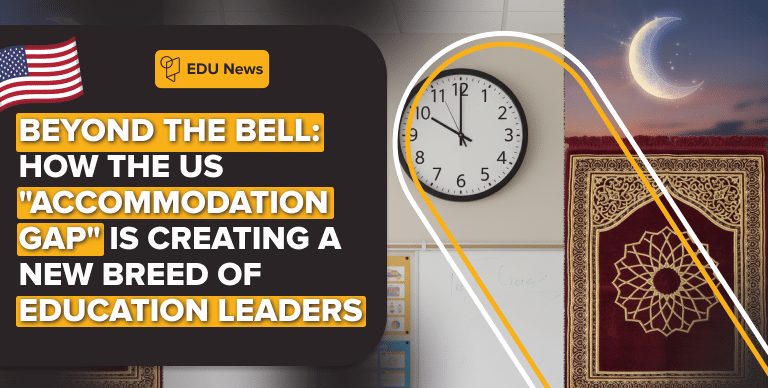
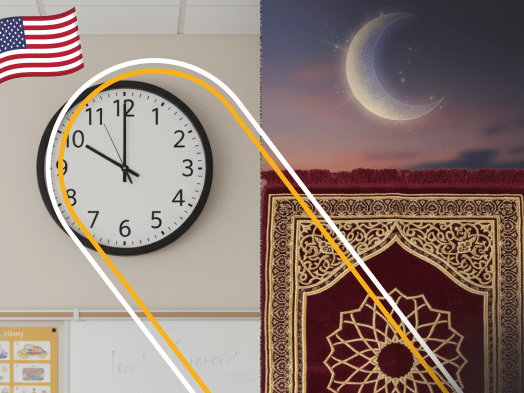
In the United States, the classroom is becoming the ultimate testing ground for cultural diplomacy. As student demographics shift faster than state policies, a quiet but powerful tension is rising: the struggle to balance rigid school schedules with the religious realities of a diverse student body.
For the modern educator, this isn’t just a challenge—it’s a career-defining moment.
The distance between a student’s desk and their prayer mat shouldn’t be a barrier to an “A.” Yet, across the US, that gap is wider than most realize. For those ready to bridge it, the path from classroom teacher to sought-after global consultant or school leader has never been clearer.
The US Landscape: A Patchwork of Policy
According to reporting by PBS NewsHour, the holy month of Ramadan has highlighted a significant “accommodation gap” in American public schools. While millions of Muslim students observe a month of fasting and prayer, many find themselves in environments that aren’t built for them.
The situation in Louisiana serves as a striking example of the current US climate. While major hubs like New York City have integrated holidays like Eid into the official calendar over the last decade, other regions remain in a state of flux. In many districts, state-level guidance is non-existent, leaving local school leaders and individual teachers to make high-stakes decisions on the fly.
The core issues reported include:
- Physical Exhaustion: Students in the Louisiana heat navigating PE and long days without water.
- Academic Friction: High-stakes testing scheduled during periods of low energy for fasting students.
- The “Hidden” Student: A growing number of students who feel they must hide their religious identity to fit into the standard school mold.
When the Louisiana Department of Education leaves guidance up to individual districts, it creates a “patchwork” where a student’s success depends entirely on which classroom they happen to sit in.
The Career Implication: The Rise of the “Inclusive Architect”
This lack of standardized policy in the US is a call to action for educators. There is a massive leadership vacuum for those who can navigate these “patchworks” with professional grace and practical solutions.
1. Transitioning from Teacher to Consultant
Schools are desperate for internal experts who can draft “Religious Accommodation Frameworks.” If you are the educator who creates a blueprint for prayer spaces, testing flexibility, and physical education alternatives, you aren’t just a teacher anymore—you are an indispensable institutional strategist.
2. Mastering the International US-Curriculum Market
There is a massive global market for “American International Schools.” These institutions crave educators who understand the US curriculum but also possess the cultural fluency to adapt it to diverse religious contexts. Your experience navigating these tensions in the US makes you a “gold-tier” candidate for high-paying leadership roles in the Middle East, Southeast Asia, and beyond.
3. DEIJ is No Longer Optional
In the US hiring market, “Diversity, Equity, Inclusion, and Justice” (DEIJ) has moved from the periphery to the center. School boards are looking for leaders who can prove they have successfully managed religious diversity in the classroom. Being proactive about Ramadan accommodations is a direct, measurable way to demonstrate this skill on your resume.
How to Respond: Proactive Steps for the Modern Educator
You don’t need to wait for a state mandate to start building your authority in this space.
- Audit Your Classroom Environment: Before a parent even asks, have a plan for “Quiet Zones” or alternative testing windows. This shows leadership and reduces student anxiety.
- Lead the Training: Volunteer to lead a brief “Cultural Literacy” session for your colleagues. Use the current US trends as a data point to explain why these shifts matter for student retention and performance.
- Document Your Solutions: When you successfully implement an accommodation, document the process and the results. This becomes your “portfolio of impact” when applying for your next leadership role or international posting.
- Stay Globally Connected: Watch how different US states—and different countries—solve these problems. Borrow the best ideas and adapt them.
Connect and Grow with EDU Passport
Navigating the shifting tides of global education is easier when you have a hub that moves at your speed. EDU Passport is designed to connect proactive educators with the tools, jobs, and networks needed to thrive in an increasingly complex landscape.
- Explore EDU Jobs: Find international and domestic schools that value inclusive leadership and cultural fluency.
- Join EDU Events: Attend webinars and conferences focused on the future of DEIJ and global education policy.
- Access EDU Deals: Find discounts on digital teaching tools or specialized certifications that help you transition your classroom online with professional polish.
The “patchwork” of policy in the US is a signal that the industry is changing. By becoming the person who provides the thread and the needle, you ensure your career is both essential and future-proof.
Ready to turn your cultural insight into a career move? Join the EDU Passport network and discover your next global opportunity.