


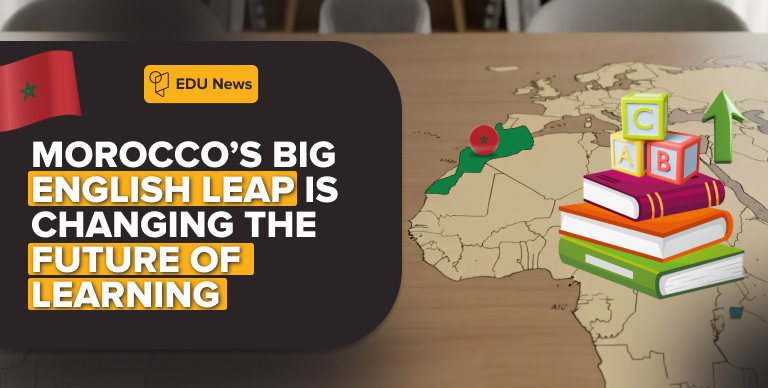
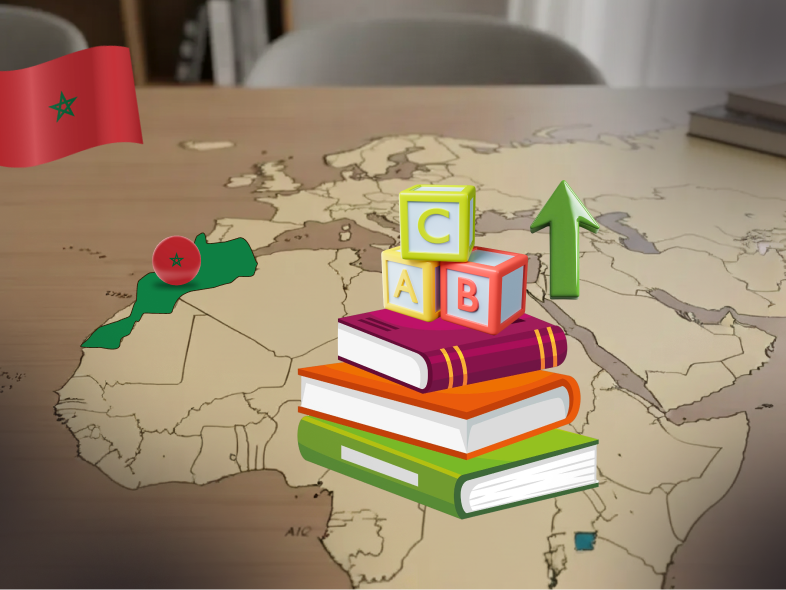
Morocco is stepping into a new chapter in its education journey. According to the latest Education First English Proficiency Index, the country has recorded the strongest improvement in English skills across North Africa this year. With a 13-point gain, Morocco is sending a powerful message. Change is happening. Classrooms are shifting. The future of learning is starting to sound a lot more global.
Morocco Leads North Africa in English Growth
The EF English Proficiency Index, produced by Switzerland-based Education First, draws its data from more than two million test-takers worldwide. It gives a snapshot of how countries are performing in real-world English use.
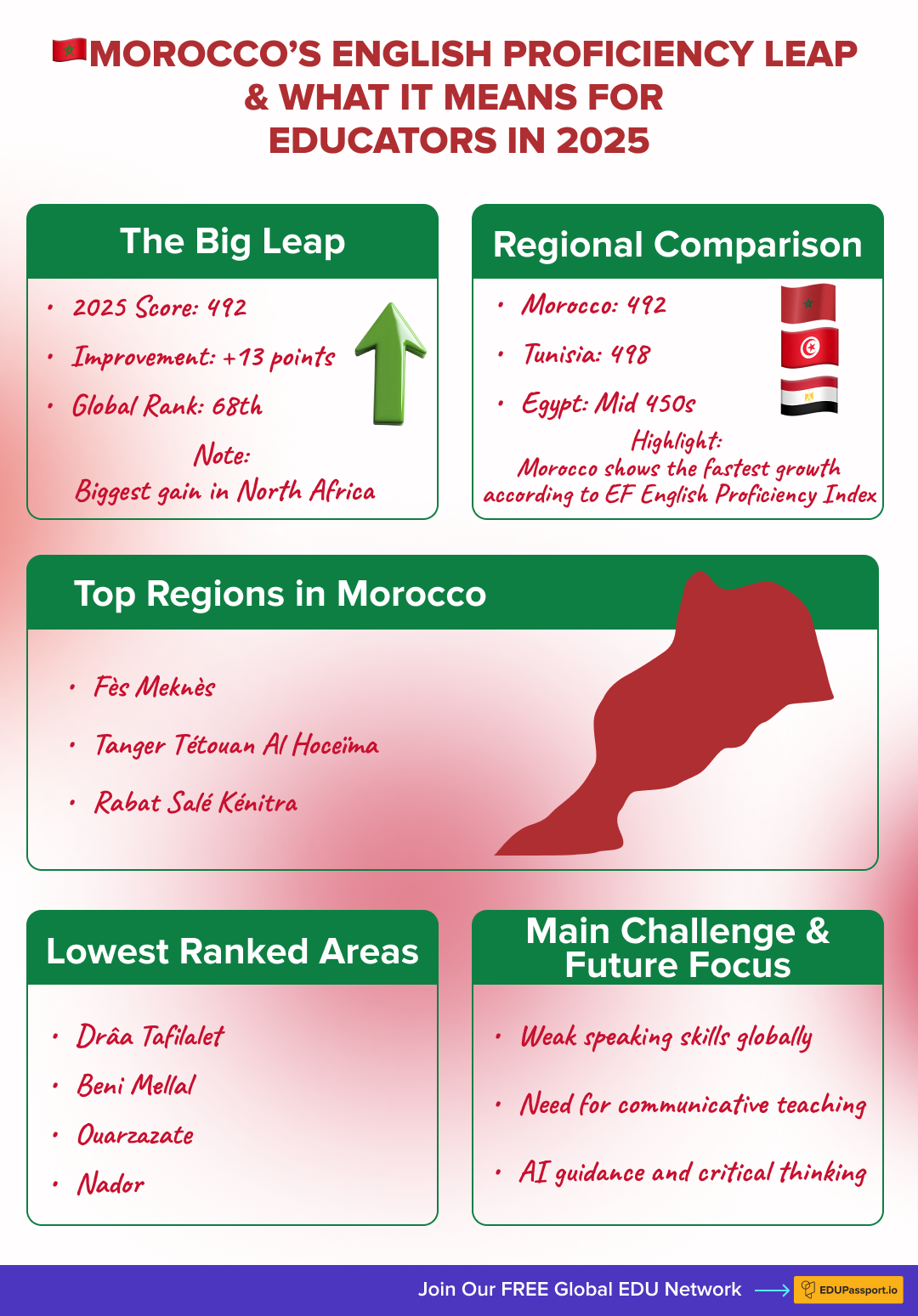
In 2025, Morocco earned a score of 492, climbing from 479 in 2024 and rising to 68th place globally. This marks the largest year-on-year improvement in North Africa.
How Morocco Compares to Tunisia and Egypt
Across the Maghreb, Morocco stood out for its progress. Tunisia recorded a modest two-point increase to 498, keeping its 66th global ranking. Egypt, in contrast, remained in the mid-450 range with no measurable change.
While Tunisia still holds a slightly higher score, Morocco’s momentum is what makes this year different. In terms of improvement, Morocco is now the regional leader.
Big Differences Within the Country
The data also revealed strong geographic gaps across Morocco.
Top performing regions include:
- Fès-Meknès
- Tanger-Tétouan-Al Hoceïma
- Rabat-Salé-Kénitra
Casablanca-Settat fell to fifth place after leading last year, while Drâa-Tafilalet ranked last.
On a city level, Rabat leads, followed by Fès, Ben Guerir, and Khemisset. Beni Mellal, Ouarzazate, and Nador remain at the bottom of the national ranking.
These gaps show that access to strong English education still depends heavily on location.
Where Morocco Now Stands in the World
Globally, the Netherlands continues to top the ranking with 624 points, followed by other Northern and Central European countries. In Africa, only South Africa and Zimbabwe sit in the high-proficiency band.
Morocco now ranks 10th in Africa and second in the Maghreb, a strong position that reflects rising ambition and growing investment in language learning.
The Global Challenge of Speaking Skills
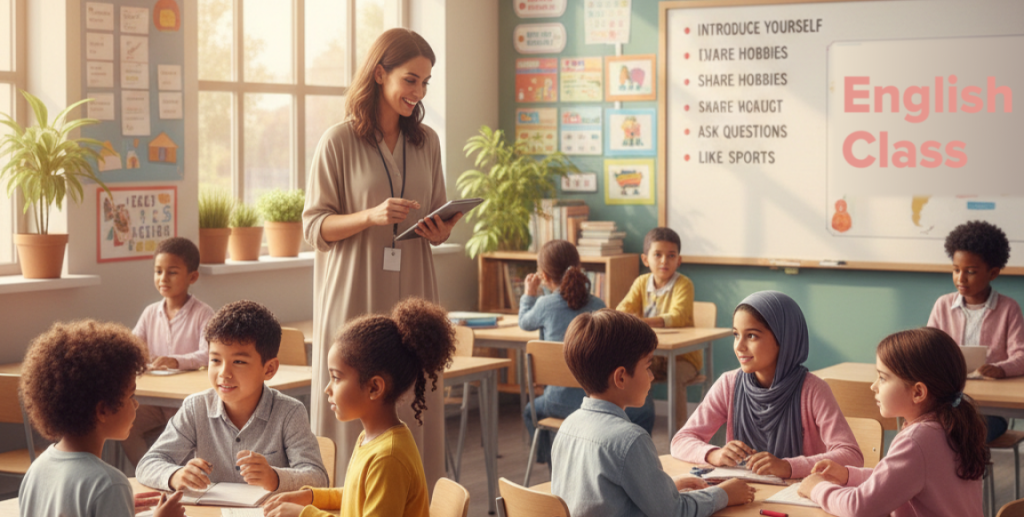
One concern highlighted in the report is a global weakness in speaking. Only three countries, Kenya, South Africa, and Zimbabwe, scored highly in oral communication. Speaking remains the hardest skill to develop and is often missing from formal assessments.
This is a crucial message for teachers. Modern classrooms must go beyond grammar and tests. Students need space to talk, collaborate, debate, and present in English.
For educators looking to strengthen classroom communication, resources like 10 Must-Have Classroom Tools for Educators in 2026 can help integrate speaking practice, technology, and interaction into daily lessons in a practical way.
What the EF Report Recommends for Schools
The study urges governments and institutions to:
- Introduce large-scale teacher and student assessments
- Set clear minimum proficiency standards for teachers
- Expand training in communicative teaching methods
- Link English learning with employment and retraining programs
- Provide stronger guidance on the use of AI in classrooms
- Increase focus on critical thinking skills
These changes align directly with what today’s learners need to thrive in a globalized world.
A Growing Opportunity for Educators
Morocco’s rise proves that real progress is possible in a short time. With the right support, access to resources, and stronger teaching strategies, the country could soon move into a higher proficiency category.
It is also a signal to educators everywhere. Now is the time to adapt, connect, and grow.
Educators who want to collaborate, find better tools, and explore new opportunities can join the global community on EDU Passport, where teaching meets possibility.
Source: Hespress EN, based on the 2025 Education First English Proficiency Index report.