




At Kellenberg Memorial High School on Long Island, a typical school day includes more than classes and exams. Students might hear parrots chirping during a test, spot peacocks strutting through the courtyard, or pause between lessons to pet a friendly dog wandering the halls.
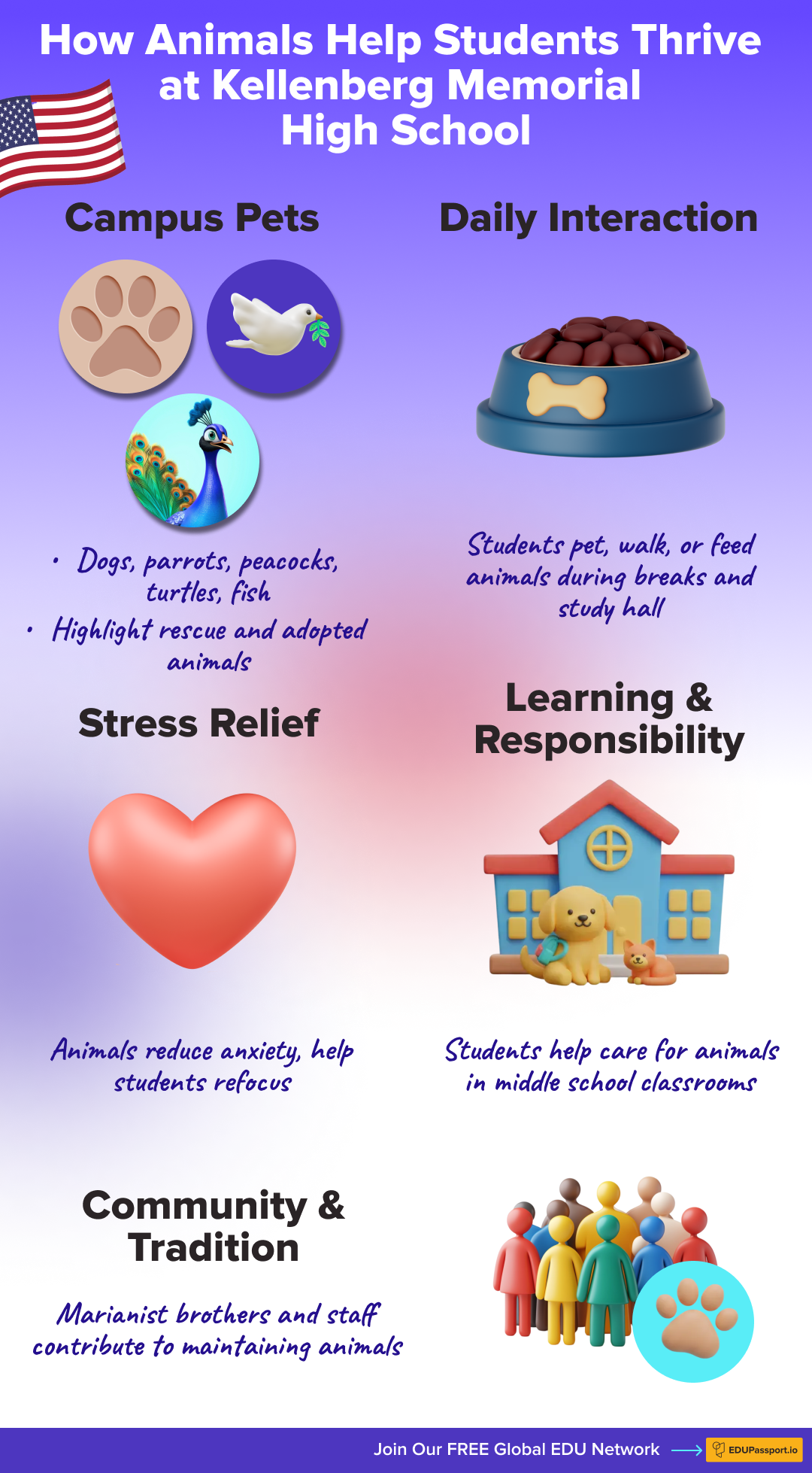
According to The Washington Post, the private Catholic school in Uniondale, New York, is home to an unusual mix of animals that play a central role in daily campus life. Four dogs, two peacocks, five peahens, nine parrots, as well as turtles and fish, live on the 21-acre campus. Many of them are rescued or surrendered animals.
Using Animals to Support Student Well-Being
Brother Kenneth Hoagland, the school’s principal, says the animals are part of Kellenberg’s broader approach to education. While the school prepares students academically for college, it also focuses on emotional well-being.
“I call them sometimes guard dogs,” Hoagland told The Washington Post. “They guard against fear, depression and anxiety.”
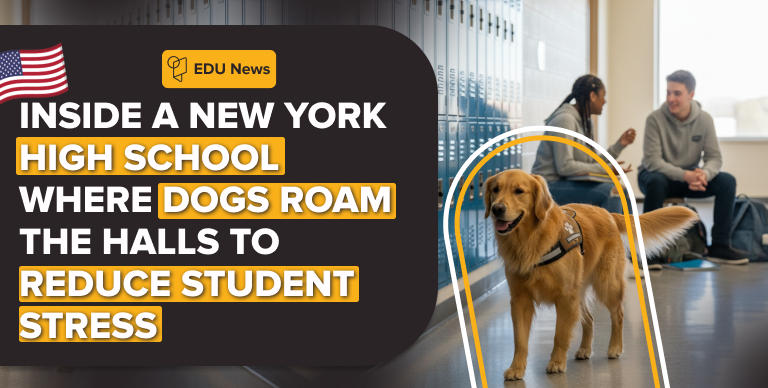
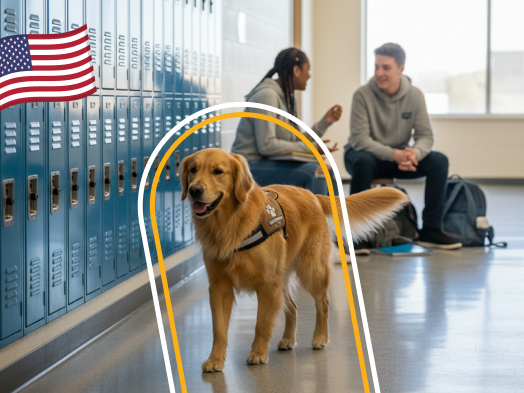
Throughout the day, students line up outside offices to spend a few minutes with the dogs, especially during lunch breaks and before heading home. Although the animals are not certified therapy dogs, Hoagland believes their impact is real.
“One visit to the dogs is sometimes worth two to the guidance counselor,” he said. “It just helps to get their mind off their troubles.”
Students Find Calm During Busy School Days
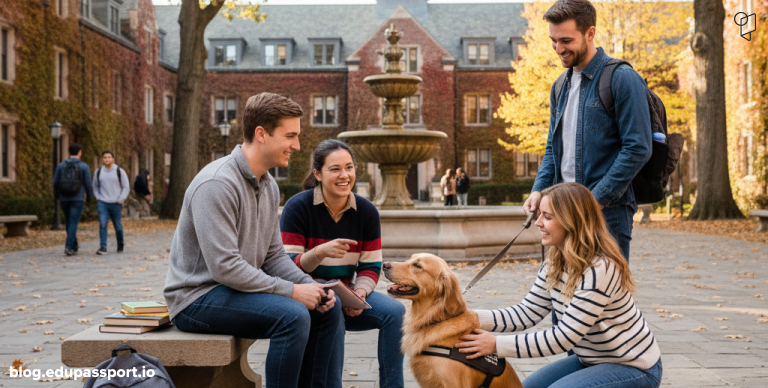
For senior Amelia Campbell, that comfort matters. With college applications, coursework, and extracurricular activities filling her schedule, stress is part of daily life. When she feels overwhelmed, she looks for Matthias, a Yorkshire terrier she first met when he wandered into her church history classroom two years ago.
Now, Campbell spends time with Matthias between classes and walks him through the courtyard during study hall, passing ponds filled with turtles and koi fish.
“High school in and of itself is a little rough,” she said. “But being able to take a break in your day and walk around with the dogs always makes you feel a bit better.”
How the Animal Program Began
Kellenberg Memorial High School opened in 1987 under the Marianist order, a Roman Catholic congregation. That same year, six Marianist brothers began living on the building’s third floor and brought their dogs with them. As more brothers joined the community, the number of animals on campus grew.
In 1997, one brother introduced a blue-and-gold macaw named Firebird, chosen to match the school’s colors and mascot. Over time, the brothers began taking in rescued parrots. A peacock and peahen arrived in 2000, eventually producing offspring that still roam the courtyard today.
Animals as Part of Daily Learning
Now, parrots greet students from enclosures in the lobby by bobbing their heads and chirping, while peacocks occasionally take flight, forcing maintenance staff to track them down during feeding time.
Animal care is also part of student learning. In the middle school housed in the same building, a classroom contains cages with turtles, snakes, and parakeets that students help look after.
Building Connection and Community
Junior Conor Stanton remembers his first day of seventh grade, when he saw Hoagland standing outside the school entrance with Beato, a Samoyed dog.
“When I saw it, I knew that I made the right choice coming here,” Stanton said, noting the dog reminded him of pets at home.
After Beato died in August, Hoagland introduced a new Samoyed named Magnus at the start of the school year. Another Marianist brother recently adopted Frassati, a miniature Bernese mountain dog named after Saint Pier Giorgio Frassati. They joined two older dogs already living on campus with the Marianist community.
To help Magnus adjust, Hoagland walked the puppy around campus early in the school year, introducing him to some of the roughly 2,500 students attending the middle and high schools.
A Calm Presence During Exams and Activities
Staff members also bring their own dogs to school. A history teacher teaches alongside Lily, a Labrador retriever, while the guidance director has a corgi and poodle mix named Riggs.
For senior Patrick Ciampa, the presence of animals made a difference during exams. While taking a U.S. history test last year, he said his nerves eased when Lily sat near his feet at the front of the classroom.
“It just kind of reminds me to bring myself back to center,” Ciampa said.
A Tradition Students Never Forget
School leaders say students with allergies are able to avoid contact with the animals, and there have been no incidents involving injuries.
Tara O’Donoghue, a 2006 graduate and current school spokesperson, told The Washington Post that while specific animals have come and gone over the years, their calming effect has remained constant.
“We wouldn’t know what Kellenberg was like without them,” she said.
As for Campbell, she plans to study political science and journalism in college. While her future path is still unfolding, one thing feels certain.
“Obviously,” she said, “I’m coming back to see Matthias.”
Helping Educators and Schools Support Student Well-Being
Stories like Kellenberg Memorial High School show how creative approaches can make a real difference in student well-being. For educators, schools, and education professionals looking to learn from global best practices and connect with like-minded institutions, access to the right network matters.
EDU Passport helps educators and education organizations discover opportunities, share insights, and build stronger learning communities worldwide.
Sign up for EDU Passport to explore education jobs, events, and resources designed to support both academic success and well-being.