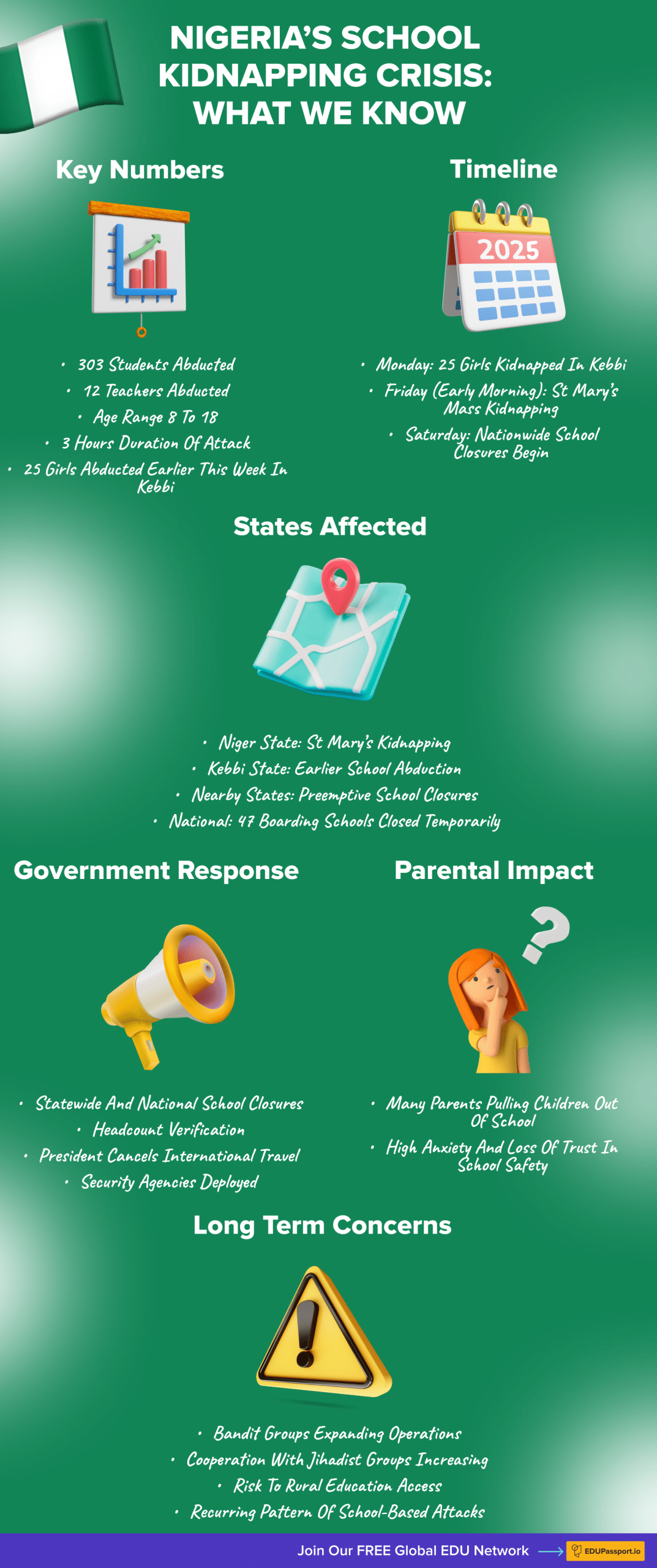





Nigeria is facing a new wave of fear after one of the largest mass school kidnappings in recent years. Early Friday morning, gunmen abducted more than 300 students and teachers from St Mary’s co educational school in Niger state. The Christian Association of Nigeria later confirmed the updated figures after verifying the total number of people taken.
This attack followed another abduction earlier in the week, where 25 girls were seized from a secondary school in neighboring Kebbi state. As incidents stack up in quick succession, parents, teachers and education officials are becoming increasingly anxious about safety across multiple regions.
What Happened During the Attack
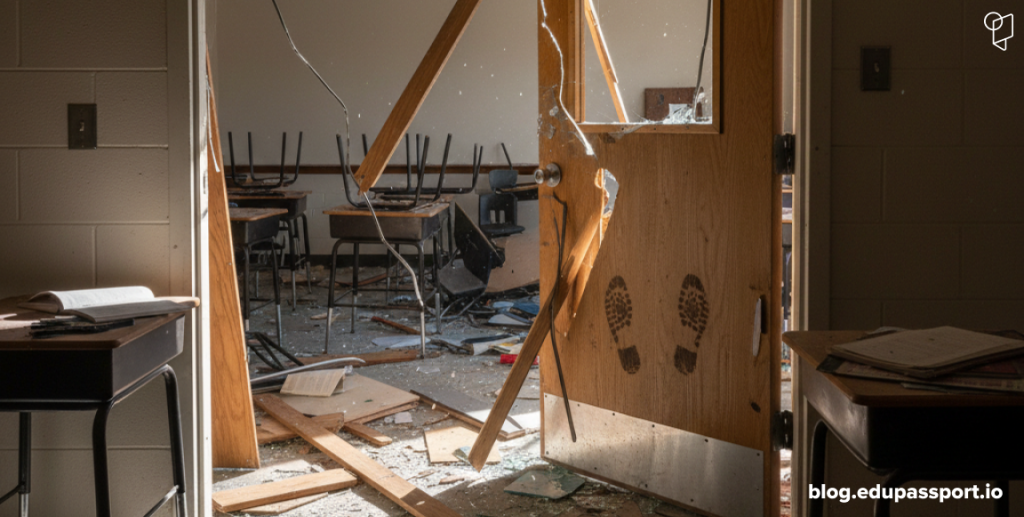
Local Catholic authorities reported that the attackers operated inside the school for nearly three hours. They broke through several gates, entered dormitories and forced students aged between 8 and 18 out of their rooms. A staff member described hearing motorcycles, loud banging and the cries of frightened children. A security guard was injured, and the attackers left with 303 students and 12 teachers.
The Nigerian government has not yet released its own confirmed numbers. Niger state governor Mohammed Umar Bago stated that security agencies are still completing a full headcount.
Widespread School Closures
Following the attack, the Niger state government shut down all schools while security teams focused on investigating the incident and beginning rescue efforts. Neighboring states introduced similar closures to protect their students.
The national education ministry also ordered 47 boarding secondary schools to close temporarily. The move shows how deeply shaken the education sector is after years of recurring attacks.
President Bola Tinubu canceled international engagements to coordinate the national response.
Parents Rush to Bring Children Home
Across the country, parents are now removing their children from boarding schools. In the outskirts of Abuja, nurse Stella Shaibu arrived at her daughter’s school as soon as the shutdown directive was announced.
She questioned how such a large group could have been abducted at once and criticized what she sees as slow government action. She also expressed openness to international support if it could help restore safety.
Rising Political Pressure
The kidnappings also happened shortly after US President Donald Trump raised the possibility of military intervention in Nigeria over violence targeting Christian communities. US defense secretary Pete Hegseth urged Nigeria to act quickly to curb the growing insecurity.
This international pressure has added complexity to an already tense security situation.
A Painful Reminder of the Past
The country is still coping with the trauma of the 2014 Chibok kidnapping, where nearly 300 girls were abducted by Boko Haram. Many remain missing more than a decade later.
In the northwest and central regions, heavily armed groups known locally as bandits continue to carry out killings and kidnappings for ransom. While these groups are not driven by a specific ideology, their increasing cooperation with jihadist networks has raised alarms among analysts.
No group has claimed responsibility for the latest attacks, but the pattern is consistent with previous large scale abductions organized for ransom.
The Emotional Toll on Schools and Families
Teachers and parents are now dealing with the unsettling reality that schools are becoming targets instead of safe learning spaces. The sudden closures disrupt learning and increase the emotional burden on families who are already anxious about their children’s safety.
Education leaders are reassessing safety protocols, emergency communication and long term security plans. For many communities, rebuilding trust in the safety of schools will take time.
Why This Matters for Educators Everywhere
Although this tragedy is unfolding in Nigeria, it highlights broader challenges that education systems around the world are facing. Safety, teacher supply and long term system stability are all interconnected.
For example, our report on teacher shortages in Luxembourg shows how different nations face different pressures but share the same need for sustainable planning. You can explore it here: Luxembourg Faces a Shortage of 500 Teachers in the Next Five Years. It offers a valuable perspective on how global issues shape local classrooms.
As teachers and schools navigate these challenges, community support becomes more important than ever. If you want to connect with educators worldwide, share insights and stay updated on stories that impact our classrooms, you can join EDU Passport for FREE and take part in a global learning community built for educators.
This news was adapted from original coverage by The Guardian: Security fears rise in Nigeria after more than 300 schoolchildren kidnapped.