




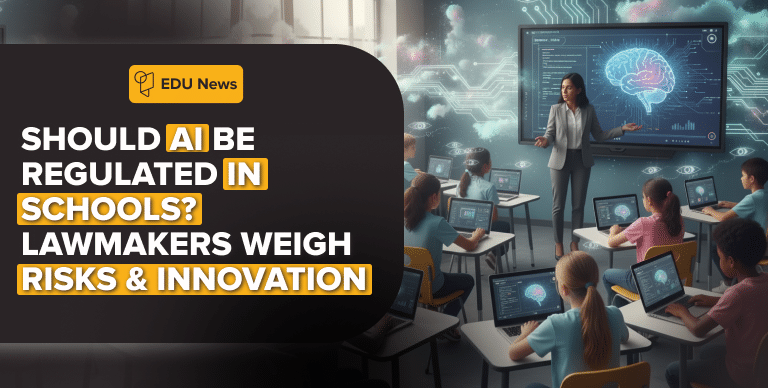

As artificial intelligence becomes more common in classrooms, educators around the world are asking the same questions: How safe is it? Who sets the rules? And how do we use AI without harming student learning?
These questions were front and center during a recent hearing of the U.S. House Committee on Education and Workforce, where lawmakers debated whether and how AI should be regulated in schools. The discussion, reported by K-12 Dive, reflects concerns already being felt far beyond the United States, as education systems globally race to keep up with fast-moving technology.
What lawmakers agree on and where they differ

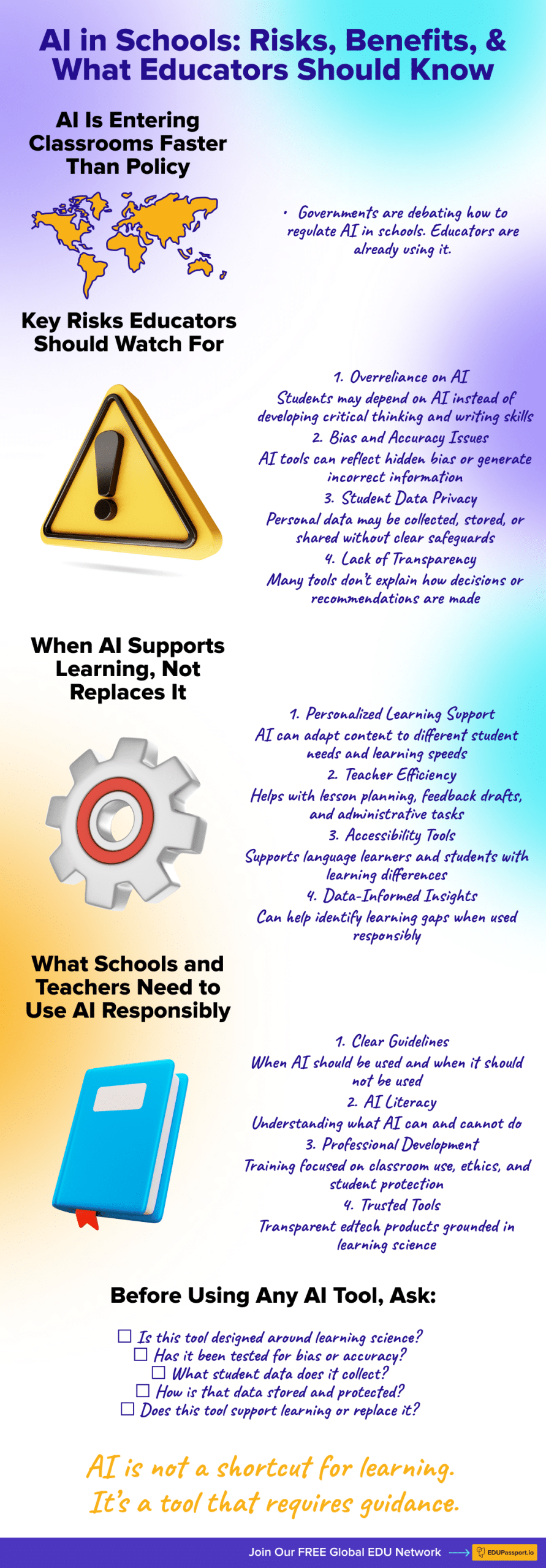
Despite political differences, lawmakers from both major U.S. parties shared common concerns about AI in education. These included students becoming overly dependent on AI tools, risks to student data privacy, and a lack of transparency from education technology companies.
Where opinions diverged was on the role of regulation.
Democratic lawmakers argued that stronger federal safeguards are needed to protect students and families, warning that current policies make it harder for states to respond to AI-related risks. Republican lawmakers, meanwhile, cautioned against introducing rules too quickly, saying excessive regulation could slow innovation and limit AI’s potential benefits for education and workforce preparation.
While the debate is rooted in U.S. policy, the underlying tension is familiar to educators worldwide: how to balance innovation with responsibility.
Federal policy and its ripple effects
The hearing was the first in a planned series by the House education committee and followed an executive order from President Donald Trump that seeks to limit state-level AI regulations, with narrow exceptions for child safety.
During the hearing, Rep. Bobby Scott of Virginia argued that governments should take an active role in shaping AI policy, rather than leaving decisions solely to technology companies. He also raised concerns about reduced federal capacity to study and oversee AI in education, citing the closure of the U.S. Department of Education’s Office of Educational Technology and funding cuts to education research bodies.
Committee Chair Rep. Tim Walberg of Michigan took a different approach, praising government efforts to encourage AI adoption in schools. He said policymakers should focus on helping schools keep pace with innovation while maintaining trust, safety, and privacy.
For educators outside the U.S., the debate highlights how national policies can influence global edtech trends, product development, and classroom practices.
Why transparency matters for teachers
One of the clearest messages from the hearing was the need for greater transparency from edtech companies.
Alexandra Reeve Givens, president and CEO of the Center for Democracy & Technology, said many AI-powered tools used in schools provide limited information about how they work. This makes it difficult for teachers and school leaders to evaluate whether a tool is effective, unbiased, or appropriate for students.
She urged educators and policymakers to demand answers to key questions: Are AI tools based on learning science? Have they been tested for bias? What safeguards exist for young users? How is student data protected?
Adeel Khan, founder and CEO of MagicSchool AI, supported the call for shared standards. He said clearer guidance could help schools identify which AI tools genuinely support learning and which may introduce unnecessary risks. Khan also emphasized the importance of educator training, evidence-building, and responsible procurement practices.
Research urges caution in classrooms
On the same day as the hearing, the Brookings Institution released a major report on AI in K–12 education, drawing on more than 400 research studies and extensive interviews with education stakeholders.
The report concluded that, at present, AI’s risks may outweigh its benefits for students. According to Brookings, poorly implemented AI can affect students cognitively, emotionally, and socially.
To reduce these risks, the report recommends:
- Clear guidance on when students should learn with and without AI
- Strong AI literacy for both teachers and students
- Professional development that supports ethical, evidence-based use
- Collaboration between governments, schools, families, and technology providers
These recommendations align closely with concerns raised by educators globally, especially in systems where AI adoption is moving faster than policy guidance.
What educators can take away now
While governments debate regulation, AI is already being used in classrooms. For teachers and school leaders, the key takeaway is practical rather than political.
Educators should:
- Ask critical questions about AI tools before adopting them
- Prioritize student privacy and data protection
- Use AI to support learning, not replace core teaching practices
- Advocate for training and clear guidelines within their institutions
As K-12 Dive reports, lawmakers may disagree on regulation, but they agree on one point: AI is here to stay in education. The challenge for educators worldwide is ensuring it is used thoughtfully, ethically, and in ways that truly benefit students.
Stay informed as AI reshapes education.
Join EDU Passport to access global education news, expert insights, and practical guidance for educators navigating change. Whether you’re teaching, leading, or hiring, EDU Passport helps you stay ahead in a fast-evolving education landscape.
Sign up for EDU Passport and explore education opportunities worldwide.