



Educators feel it first. Curriculum questions. Student anxiety. Career conversations that sound different than they did a decade ago. Across education systems, one message is getting louder. Employers care less about where someone studied and more about what they can actually do.
This shift toward skills based hiring is not a trend. It is a structural change. And for educators, especially ESL and EAL teachers, international school leaders, and career focused educators, it opens real opportunities if you know how to respond.
Here is what is changing and why it matters for your career.
What’s changing in global hiring
For a long time, degrees acted as a shortcut. Employers used them to filter candidates fast. That shortcut is breaking down.
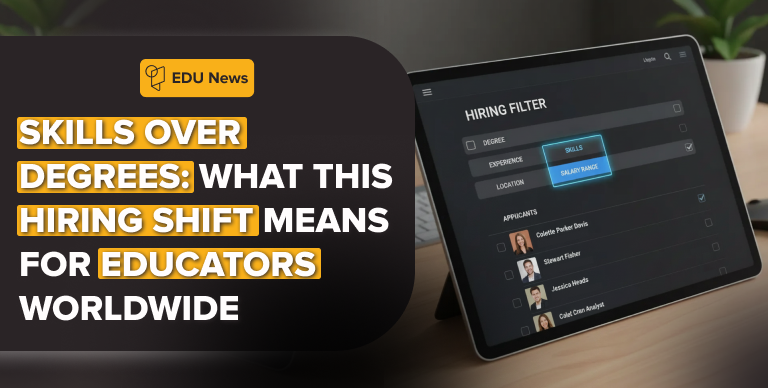
Across industries, employers now prioritize demonstrable skills. Portfolios. Projects. Real experience. Proof of competence. According to reporting by FutureSA, many employers no longer treat degrees as the default signal of employability. Research from the World Economic Forum supports this shift, showing that companies are actively removing degree requirements from job listings.
Technology roles accelerated this change, but the logic spreads fast. Tools evolve quickly. Workflows change. A static credential struggles to keep up with dynamic roles. The result is simple, employers want people who can contribute early, adapt quickly, and learn continuously. This does not mean learning is less important. It means relevance matters more than prestige.
What this means for educators’ careers

This shift hits education from both sides. As educators, you teach learners preparing for work. As professionals, you are also navigating a changing job market yourself.
First, teaching skills are gaining new visibility. Communication. Collaboration. Instructional design. Assessment. Digital fluency. These are not soft extras. They are transferable, in demand skills across schools, edtech companies, training providers, and education vendors.
Second, career paths are widening. Educators are no longer limited to traditional classrooms. Skills based hiring opens doors to roles in curriculum development, teacher training, academic consulting, education sales, learning experience design, and AI supported learning platforms.
Third, international mobility increases. When skills matter more than local credentials, educators with clear portfolios and global experience become more competitive across borders.
For ESL and EAL teachers, this is especially powerful. Your work already proves adaptability, cross cultural communication, and real world problem solving. Those skills translate well beyond language classrooms.
Why work aligned learning now matters more
Employers are clear about one thing. Theory alone is not enough. Traditional education often separates learning from application. Students observe. They memorize. They graduate. Then reality hits. Work aligned learning closes that gap. Learners use real tools. They solve real problems. They work within actual teams and constraints. This applies to teacher education too. Schools, training centers, and education companies increasingly value educators who understand how learning operates inside systems, not just syllabi.
For education leaders, this creates an opportunity to rethink professional development. Move beyond workshops that feel good for a day. Focus on experiences that build measurable capability.
AI is reshaping education roles, not replacing them
AI enters every conversation now, and often with fear attached. The reality is more nuanced.
AI automates repetitive tasks. It supports planning, assessment, content generation, and analysis. But it does not remove the need for educators. It changes what excellence looks like.
Educators who know how to work alongside AI gain leverage. They design better learning experiences. They personalize instruction faster. They focus on judgment, empathy, and strategy.
Employers increasingly value educators who are comfortable experimenting with tools, not just following fixed methods. Adaptability matters. Curiosity matters. Continuous learning matters.
These qualities align directly with skills based hiring.
How educators can respond and prepare
This shift rewards proactive educators. You do not need to abandon degrees or certifications. You need to make your skills visible.
Start with proof. Build a portfolio. Lesson designs. Learning outcomes. Projects. Training materials. Results. Show impact, not just roles.
Next, stay close to practice. Engage with current tools and platforms used in schools and education companies. Follow how international schools hire. Track how education vendors describe roles.
Then, expand your network intentionally. Opportunities now come through communities, not just applications. Platforms that connect educators to jobs, events, vendors, and peers matter more than ever.
Finally, think in skills language. When you talk about your work, describe what you can do, not only where you worked. Employers listen differently now.
Where EDU Passport fits naturally
This is exactly where a global education hub becomes useful.
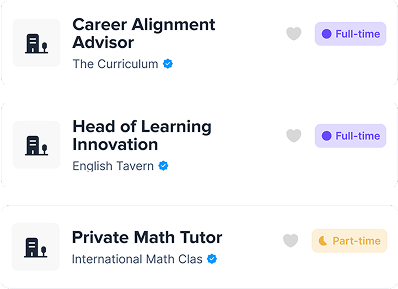
Educators need visibility into international teaching jobs that value skills and experience. They need access to education events and conferences where practical learning happens. They need exposure to vendors, tools, and services shaping modern classrooms.
EDU Passport connects these dots. Not as a job board alone, but as a professional ecosystem. You can explore roles, follow organizations, discover tools, and spot emerging opportunities without guessing where the market is heading.
In a skills first world, staying connected matters.
The bottom line for educators
Degrees still have value. But they no longer speak for you on their own. Skills based hiring rewards educators who stay relevant, reflective, and ready to grow. It values experience, adaptability, and intent. It opens doors across borders and sectors. Education is not being devalued. It is being redefined. If you want to stay ahead of that shift, visibility and connection are key.
Join EDU Passport to explore global education jobs, events, and professional opportunities designed for educators who want to grow with the future of learning.