


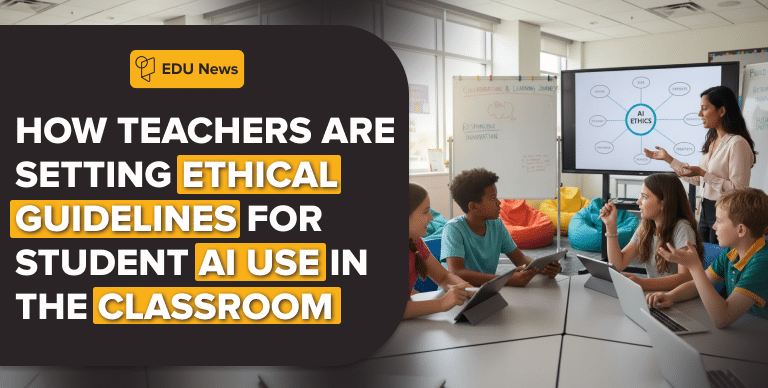

Artificial intelligence is no longer tomorrow’s challenge for schools — it’s today’s. As more educators grapple with how AI fits into academics, many are developing clear expectations and ethical guidelines that help students learn with these tools rather than rely on them as shortcuts. In a recent Education Week article, experts and classroom teachers shared how they’re guiding student AI use and what it can mean for deeper learning.
Listen to Students: What They Say About AI in Their Learning
Sarah Cooper, an 8th grade U.S. history and civics teacher and associate head of school at Flintridge Preparatory School in California, suggests educators start by listening to students’ own experiences with AI. In her classes, students reflected on how they used tools like ChatGPT — often as a personalized tutor or study helper — and whether it helped them understand class content.
Students shared that AI can support learning when used thoughtfully:
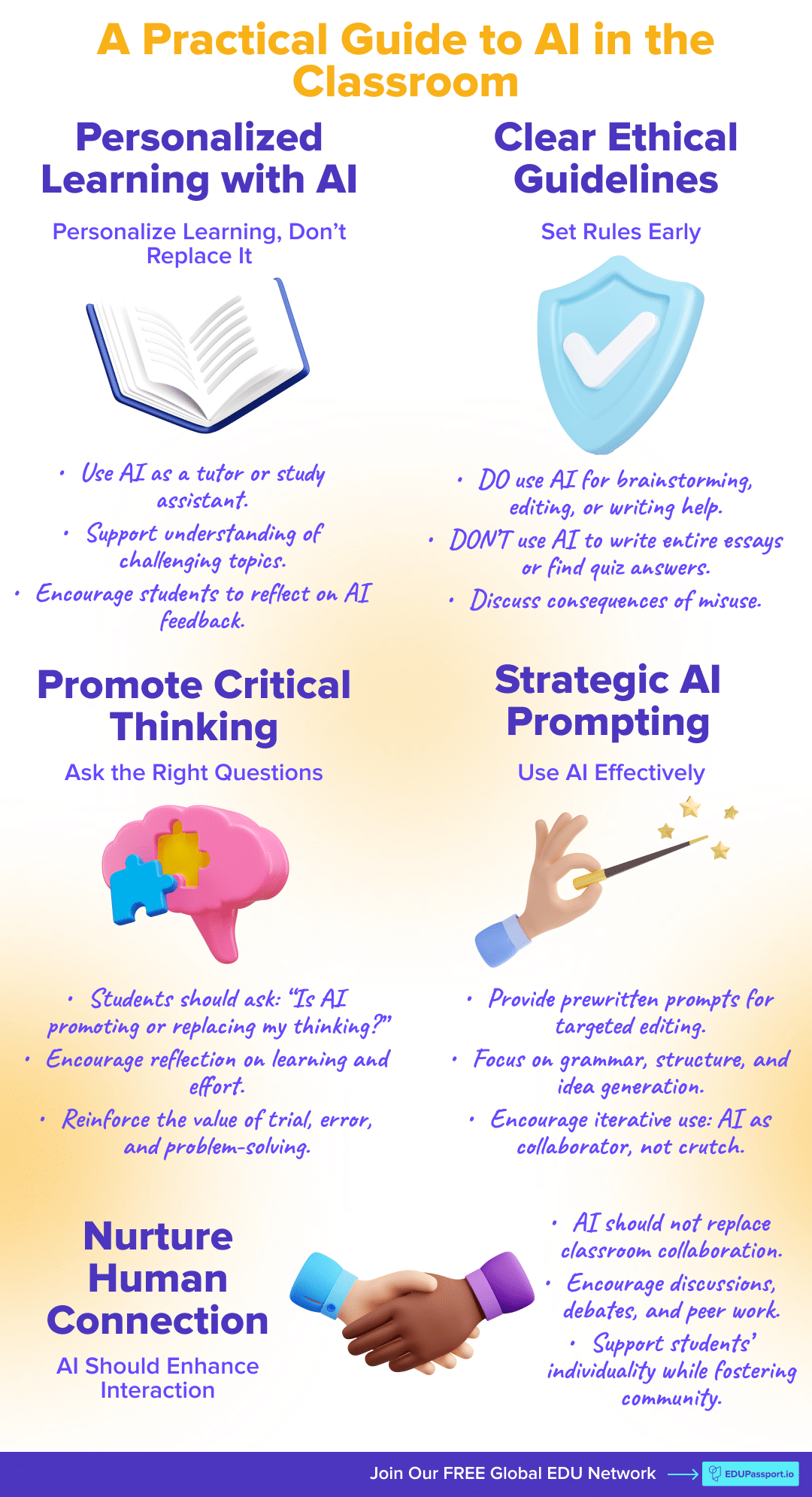
- Personalized Tutoring: Some used AI to explain tricky concepts or quiz themselves on key ideas when they didn’t fully grasp lessons.
- Targeted Feedback: With careful prompts, students asked AI for copyediting suggestions — not to rewrite their work, but to point out grammar and punctuation fixes while keeping their voice intact.
- Idea Generation: Others used AI for brainstorming project titles, slogans, or visual ideas, as long as they cited the tool.
But students also raised ethical concerns. One wrote that “AI…is not a reliable source of information since it is still code…,” and another insisted that student writing should come straight from themselves rather than be AI-generated.
Setting Clear Ethical Guidelines for AI Use
Michaela Hahn, a language arts teacher in Ohio, emphasizes that AI use needs clear, ethical rules — not just tools. She compares integrating AI into learning to building train tracks while the train is already moving: teachers are laying the groundwork even as students accelerate ahead.
Hahn’s principles include:
- Teach Ethics Directly: Early in the year, she introduces a lesson on ethical AI use, covering what’s appropriate (like using AI as a writing coach) and what isn’t (like generating whole essays).
- Critical Thinking First: Students learn to ask, “Is AI promoting critical thinking or replacing it?” — a question that steers them toward deeper cognitive engagement.
- Strategic Prompting: Hahn equips middle schoolers with prewritten prompts so that AI becomes a personalized editor rather than a crutch, helping every student revise and improve their own work.
The HUMAN Framework: A Guide for Teachers
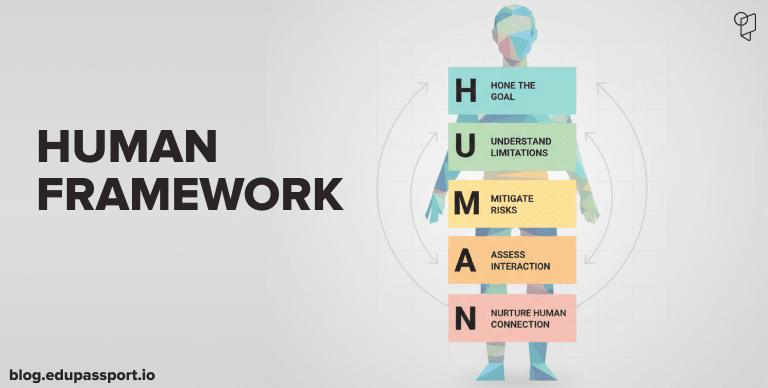
Not every school will approach AI the same way, but frameworks help ground decisions. Braxton Thornley, a senior technology trainer with the Utah Education Network, co-developed the HUMAN framework — a research-based tool to help educators structure AI use thoughtfully.
The five elements of HUMAN include:
- Hone the Goal: Clarify how the AI activity supports learning goals.
- Understand Limitations: Be aware that AI can hallucinate or provide inconsistent responses.
- Mitigate Risks: Vet tools for privacy and avoid overreliance that stifles creativity.
- Assess the Interaction: Build students’ ability to critique AI outputs and compare them to human thinking.
- Nurture Human Connection: Use AI in ways that strengthen — not replace — classroom engagement and collaboration.
Why Ethical AI Guidelines Matter
Across classrooms, teachers from different regions agree: AI isn’t going away, and neither are the opportunities — or the challenges — it brings. Ethical guidelines help students learn how to use these tools responsibly, so they build knowledge, critical thinking, and integrity alongside technological fluency.
By setting clear expectations, modeling thoughtful use, and helping students reflect on AI’s role in their work, educators are turning a moment of disruption into one of meaningful learning. And as students continue to shape how they interact with these tools, teachers are listening — and learning — too.
Want to stay ahead in guiding students through the world of AI? Sign up for EDU News to get practical classroom strategies, expert insights, and resources for teaching digital literacy and ethical tech use.