




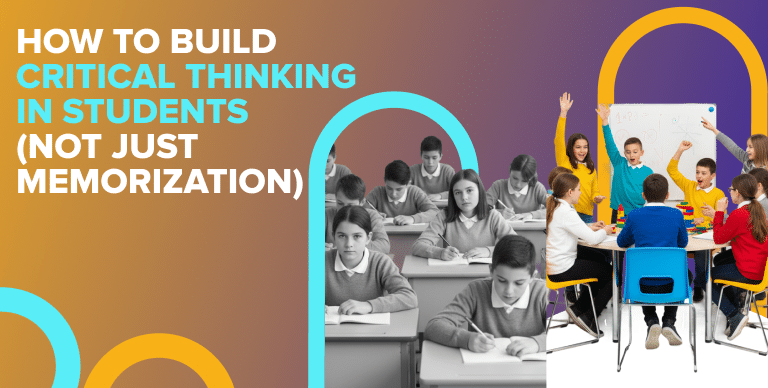
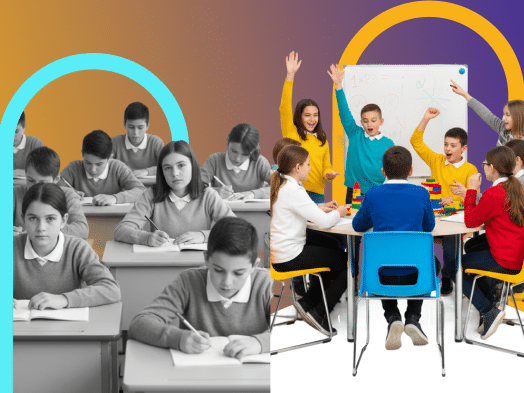
For years, many classrooms have focused on one thing above all else, remembering information. Students memorize definitions, formulas, and facts, then reproduce them in exams. While this approach can produce short-term results, it rarely builds long-term understanding.
The world students are entering today demands something very different. They are expected to analyze information, question assumptions, and solve unfamiliar problems. Memorization may help them pass tests, but it does not prepare them for real challenges.
This is why learning how to build critical thinking in students has become one of the most important skills for modern educators.
What Critical Thinking Actually Looks Like in the Classroom
Critical thinking is often misunderstood as simply asking more questions. In reality, it is about how students process information. A student who thinks critically does not just accept an answer but evaluates it, connects it to prior knowledge, and considers alternative perspectives.
In a classroom that prioritizes thinking, students explain their reasoning, challenge ideas respectfully, and explore multiple solutions. The focus shifts from getting the right answer to understanding why an answer works.
This shift changes the role of the teacher as well. Instead of being the primary source of answers, the teacher becomes a facilitator of thinking.
Moving From Passive Learning to Active Thinking
One of the biggest barriers to critical thinking is passive learning. When students only listen and take notes, they are not required to engage deeply with the material.
To change this, lessons must be designed to require participation. Instead of presenting complete information, teachers can introduce problems, scenarios, or case studies that require students to think before receiving answers.
Even small changes, such as asking students to justify their responses or compare two ideas, can significantly increase cognitive engagement.
The Power of Questions That Make Students Think
The type of questions asked in class determines the level of thinking students develop. Questions that only require recall limit students to memorization. Questions that require explanation, analysis, or evaluation push them further.
For example, instead of asking what happened, ask why it happened. Instead of asking for a definition, ask how a concept applies in a real situation.
When students are consistently exposed to deeper questions, they begin to think differently, not just in class, but in how they approach problems overall.
Creating a Safe Environment for Thinking
Students will not think critically if they are afraid of being wrong. In many classrooms, mistakes are treated as failures rather than opportunities to learn.
A thinking-focused classroom normalizes uncertainty. Students are encouraged to share ideas, even if they are incomplete. Discussions become spaces for exploration rather than judgment.
When students feel safe, they participate more actively and take intellectual risks that lead to deeper learning.
Using Real-World Context to Strengthen Understanding
Critical thinking becomes more meaningful when students see how knowledge applies beyond the classroom. Abstract concepts can feel distant unless they are connected to real situations.
Teachers can introduce real-world problems, current events, or practical applications that require students to analyze and respond. This not only improves understanding but also increases motivation.
Students begin to see learning as something useful rather than something they simply have to complete.

Encouraging Reflection, Not Just Answers
Reflection is a key part of critical thinking. After completing a task, students should be encouraged to think about how they arrived at their answers.
Questions such as what was challenging, what could be improved, and what strategy worked best help students become more aware of their own thinking process.
This awareness strengthens their ability to approach future problems more effectively.
Balancing Curriculum Demands With Deeper Learning
One of the common concerns teachers face is time. With strict curricula and exam pressure, it can feel difficult to prioritize critical thinking.
However, critical thinking does not require completely new lessons. It can be integrated into existing content by adjusting how topics are taught.
Instead of covering more material superficially, focusing on deeper understanding often leads to better long-term outcomes, even in exam performance.
Conclusion
Building critical thinking in students is not about abandoning content but about transforming how that content is experienced. When students learn to question, analyze, and reflect, they move beyond memorization and develop skills that stay with them long after they leave the classroom.
For educators who want to grow in environments that value this kind of teaching, the right opportunities matter. Platforms like EDU Passport connect teachers with schools that prioritize meaningful learning, innovation, and professional development.
Teaching is evolving, and so are the expectations placed on educators. By developing critical thinking in your classroom and seeking environments that support it, you position yourself not just as a teacher, but as an educator prepared for the future.